
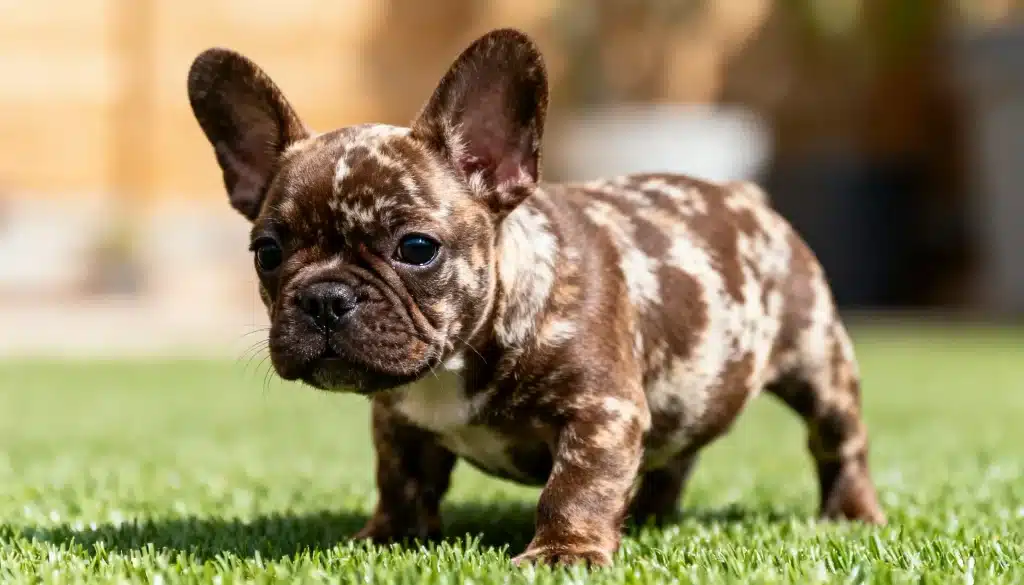
Chocolate Merle French Bulldogs have a personality that matches their looks.
Loyal, funny, and full of character. But before you fall too hard, there are a few important things to know first.
This post covers everything you need to know about Chocolate Merle French Bulldogs, their looks, health, temperament, and more.
French Bulldog Color and Patterns Variations
French Bulldogs come in a stunning range of colors and patterns, from classic fawn and brindle to rare merle and lilac.
Standard Colors
French Bulldogs come in a range of colors and patterns. Some are standard, others are rare. Here’s a quick look:
| Color/Pattern | What It Looks Like |
|---|---|
| Brindle | Dark base coat with lighter streaks running through it |
| Fawn | Warm tan shade, ranging from light to reddish-brown |
| Cream | Off-white coat with a slight golden undertone |
| White | Bright, clean white, sometimes with small color patches |
Rare Colors
Rare colors in French Bulldogs fall outside the standard breed palette. They appear due to specific gene combinations inherited from both parents.
| Color | Description |
|---|---|
| Blue | A cool, grey-blue coat caused by a dilute gene. |
| Chocolate | A rich, warm brown coat with lighter eyes and a brown nose. |
| Lilac | A pale, silvery-purple tone. It’s one of the rarest Frenchie colors. |
| Merle | A patchy, swirled pattern with lighter and darker shades mixed together. |
The Genetics Behind Their Coat
The merle French bulldog gets its look from two rare genes working together.
First, there’s the merle gene. It creates those patchy, swirling patterns across the coat. Then there’s the chocolate gene, which replaces the usual black pigment with a warm, rich brown tone.
When both genes show up in the same dog, the result is that striking two-toned, marbled coat that everyone notices.
Both the genes are dominant. That means both parents need to carry the trait for it to appear in a puppy. It’s not common. That’s exactly why these dogs are so rare.
The merle gene also affects pigmentation beyond the coat. It can influence eye color, too, which is why many of these dogs have blue or mixed-colored eyes.
How Do They Stand Out From Other Frenchies?

Most French bulldogs come in solid or two-tone coats think fawn, brindle, or pied. These are the common colors of bulldogs.
But this French bulldog is different; that swirling, patchy coat pattern simply doesn’t show up in standard bulldogs.
Their eye color is another big difference. Many have blue or odd-colored eyes, a trait rarely seen in regular Frenchies.
Personality-wise, they’re still every bit the affectionate, goofy companion the breed is known for. No difference there.
But visually, they sit in a category of their own. That combination of color, pattern, and eye color makes the chocolate merle French bulldog genuinely one of a kind.
Single Merle vs. Double Merle
These two terms come down to genetics. Many buyers don’t know this distinction exists. But it’s one of the most important things to understand before bringing one of these dogs home.
| Feature | Single Merle | Double Merle |
|---|---|---|
| Gene Copies | One | Two |
| Coat Appearance | Dappled, patchy patterns | Mostly white, minimal patches |
| Eye Color | Often blue or mixed | Pale blue, sometimes absent |
| Health Risks | Generally healthy | Deafness, blindness, defects |
| Breeding Risk | Low | High |
Responsible breeders always pair a merle with a non-merle. This avoids double merle puppies entirely. It’s a simple step that makes a big difference to the dog’s quality of life.
What’s it Like Living With One?
Chocolate Merles are just as warm and goofy as any other Frenchie at heart.
They love being around people. They thrive on attention and do really well in families, with singles, and even with older kids.
They’re not overly energetic, which makes them great for apartment living. But they do have a playful, stubborn streak.
Training takes patience. Short, fun sessions work best with them.
They also don’t like being left alone for long. Separation anxiety is common in the breed.
So they’re best suited for someone who’s home often and loves a clingy, affectionate companion. That’s just the nature of a chocolate Frenchie.
Training Tips That Actually Work
Training a French bulldog isn’t complicated, but it does require consistency.
These dogs are smart, but they have a stubborn side. They respond best to positive reinforcement, treats, praise, and short sessions work really well.
Pushing too hard or repeating commands too many times backfires fast. Keep things light and fun.
Quick Tips:
- Keep sessions under 10 minutes
- Use treats as rewards, not punishments
- Repeat commands daily for best results
- Socialize them early with people and other pets
- Stay calm and consistent; they pick up on frustration
Keeping That Coat and Body in Good Shape

A chocolate merle French bulldog is relatively low-maintenance when it comes to grooming. Their short coat doesn’t need much brushing.
A quick wipe-down a few times a week keeps things clean and tidy. Bathing once a month is usually enough.
The real care goes into their skin folds. Those wrinkles around the face need regular cleaning to avoid moisture buildup and irritation.
A damp cloth works fine for that.
Ear cleaning and nail trimming are also important parts of the routine. Check the ears weekly. Trim nails every few weeks to keep them comfortable and healthy.
How Much Does Chocolate Merle Cost?
The price of a chocolate Frenchie varies quite a bit depending on where you live. Their rarity plays a big role in the cost.
The genetic combination behind their coat and eye color makes them one of the more expensive Frenchie variants available.
| Country | Price Range (Local Currency) |
|---|---|
| USA | $4,500 – $15,000 |
| UK | £1,800 – £7,000 |
| Canada | CAD 7,000 – 10,000 |
| Australia | AUD 8,000 – 12,000 |
| India | ₹3,50,000 – ₹4,00,000+ |
| France | €5,000 – €7,000 |
Prices can shift based on demand and availability in each region.
Nutrition and Diet
Feeding a chocolate merle French bulldog doesn’t have to be complicated. Their nutritional needs are similar to those of any standard Frenchie.
The focus should be on high-quality animal proteins, such as beef, lamb, or fish. These support muscle maintenance and energy.
Healthy fats from fish oil or flaxseed keep the coat shiny and skin healthy, especially important given the potential skin sensitivities in merle-patterned dogs.
Avoid fillers like corn, wheat, and soy. Stick to digestible carbs like sweet potatoes or rice instead.
A quick feeding guide by life stage:
| Life Stage | Calories/Day | Key Additions |
|---|---|---|
| Puppy | 500 – 1,000 | DHA, glucosamine |
| Adult | 400 – 800 | Omegas, probiotics |
| Senior | 300 – 600 | Joint support, lower fat |
Feed adults 1 to 2.5 cups of kibble daily, split across 2 to 3 meals. Keep treats to 10% of daily intake and always consult a vet for allergy concerns.
Fun Facts About Chocolate Merle French Bulldog
There’s always something new to learn about these dogs.
Beyond their rare looks and warm personalities, they possess genuinely interesting traits that make them stand out even more.
1. Every coat is one of a kind: The chocolate and merle pattern creates a marbled look that’s never the same on any two dogs.
2. Their eyes steal the show: Many carry blue or two different colored eyes, one blue and one brown, thanks to the merle gene affecting pigment.
3. They’re natural entertainers: Affectionate, goofy, and full of personality, they love cuddles just as much as they love making people laugh.
4. They’re genuinely rare: Chocolate frenchie carries both a dominant merle gene and a recessive chocolate gene, making the combination harder to produce.
5. Those ears are iconic: Their large, bat-like ears, paired with that marbled coat, give them a look hard to forget wherever they go.
Final Thoughts
There’s clearly a lot that sets these dogs apart, from their rare genetic makeup to their warm, affectionate personality.
Their coat colors, diet needs, and training style all come together to make them a truly one-of-a-kind breed. But owning one is a real commitment.
The cost is high, the care is consistent, and the attention they need is daily.
For the right owner, though, it’s absolutely worth it. There’s nothing quite like sharing a home with a chocolate merle French bulldog.
Frequently Asked Questions
1. What Vegetables Can Frenchies Not Eat?
Frenchies should avoid onions, garlic, leeks, and chives. These are toxic to them and can cause serious digestive and blood-related health issues.
2. Do You Have to Wipe Frenchies After Pooping?
Yes, especially for Frenchies with short tails or deep tail pockets. Wiping keeps the area clean and prevents skin irritation or infection.
3. What are Frenchies Scared of?
Frenchies are often scared of loud noises, strangers, and being left alone. Some also show anxiety around large dogs or sudden movements.
4. What Calms Frenchies Down?
Gentle petting, a quiet environment, and a consistent daily routine help calm them down. Familiar toys and soft music also work well.


