Yes, rice is good for dogs when served properly. It’s a safe, digestible carbohydrate that provides quick energy and effectively settles upset stomachs.
Many commercial dog foods include rice as a primary ingredient because it’s easily digestible and gluten-free.
This makes it suitable for dogs with certain food sensitivities.
The key is moderation. Rice should supplement your dog’s protein-rich diet, not replace it. Always serve it plain and fully cooked, never raw or seasoned.
When used correctly, rice supports digestive health and adds nutritional value to your dog’s meals.
White Rice vs. Brown Rice: Which Type of Rice Is Best for Dogs?
White rice and brown rice differ in nutrition, taste, and cooking time. Understanding their benefits helps you choose the right option for your health goals and meals.
| Factor | White Rice | Brown Rice | Basmati | Jasmine | Wild/Red/Black |
|---|---|---|---|---|---|
| Best For | Sick dogs | Healthy dogs | Healthy dogs | Healthy dogs | Very healthy dogs |
| Digestibility | Easiest | Moderate | Easy | Easy | Hardest |
| Fiber | Low | High | Moderate | Low-Moderate | Very High |
| Nutrition | Lowest | Moderate | Moderate | Moderate | Highest |
| Glycemic Index | High | Moderate | Low | Moderate | Lowest |
| Key Benefit | Soothes stomach | Extra nutrients | Lower blood sugar | Gentle texture | Maximum protein & antioxidants |
| When to Feed | Illness (2-3 days) | 2-3×/week | 2-3×/week | 2-3×/week | 1-2×/week |
Can dogs eat white rice? Yes. If your pup is dealing with digestive issues, white rice is your go-to option. For healthy dogs, brown rice or specialty varieties like basmati, jasmine, or wild rice work great.
Nutritional Benefits of Rice for Dogs
- Easy to Digest: Rice is gentle on your dog’s stomach. White rice is recommended for upset stomachs, diarrhea, or sensitive digestion.
- Good Energy Source: Rice provides carbohydrates for steady energy throughout the day, especially helpful for active dogs.
- Low in Fat: Rice is naturally low in fat, making it safe for weight management or dogs with pancreatitis.
- Provides Essential Nutrients: Rice contains B vitamins, iron, magnesium, and phosphorus. Brown rice offers more nutrients than white rice.
- Gluten-Free and Hypoallergenic: Rice doesn’t contain gluten and rarely causes allergic reactions. Safe for dogs with grain sensitivities.
- Supports Digestive Health: White rice firms up loose stools. Brown rice provides fiber for regular bowel movements.
Rice works best with quality protein and vegetables, not as the main food source.
How to Prepare Rice Safely for Your Dog
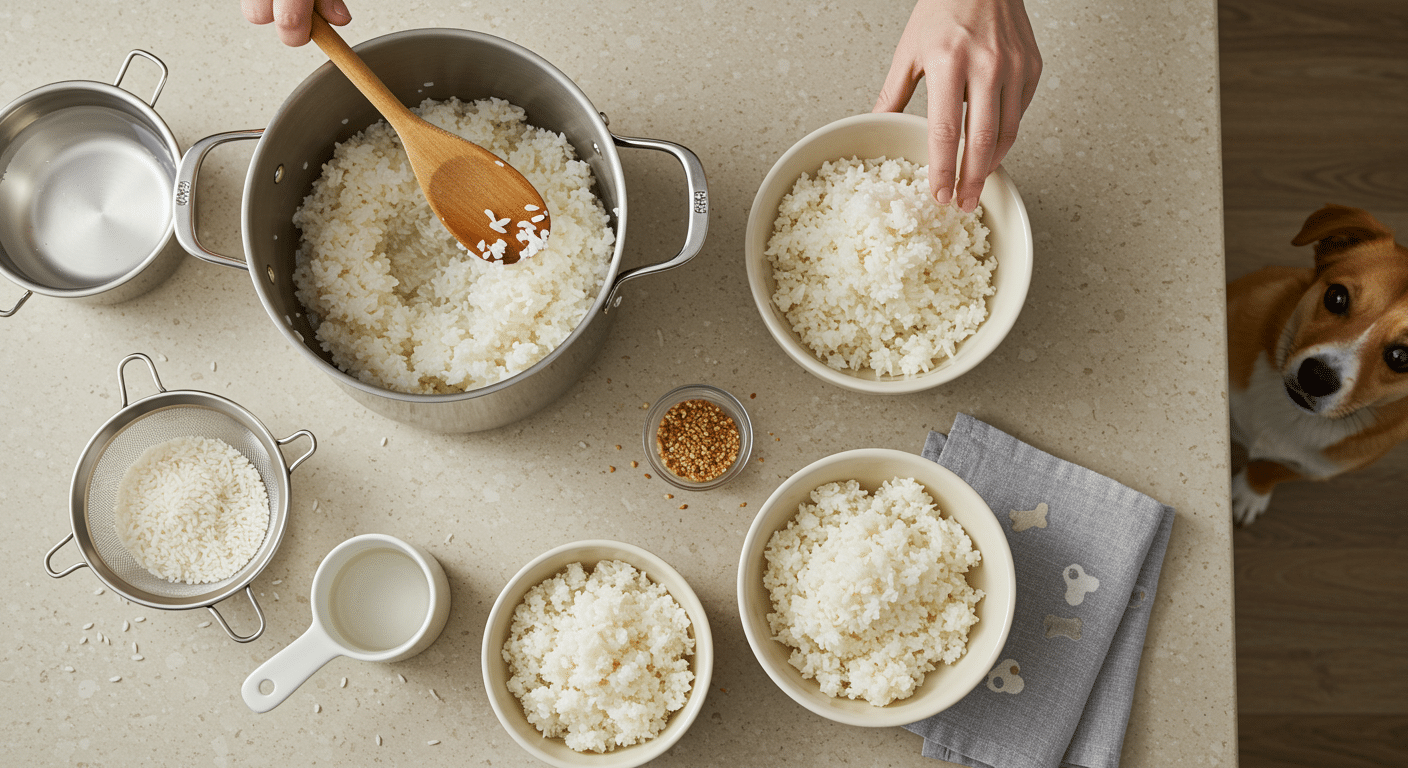
Feeding rice safely comes down to preparation, portion control, and frequency. Here’s what you need to know.
Follow these simple steps to prepare rice that’s safe and easy for your dog to digest.
Step 1: Choose Your Rice
Pick plain white or brown rice, no instant rice, seasoned mixes, or flavored varieties. Check the package to ensure there are no added ingredients.
Step 2: Rinse Thoroughly
Rinse the rice under cold water in a fine-mesh strainer. This removes excess starch, making it easier to digest, especially for white rice.
Step 3: Use the Right Water Ratio
- White rice: 1 cup rice to 2 cups water
- Brown rice: 1 cup rice to 2.5 cups water
Use plain water only, no broth, salt, or oil.
Step 4: Cook Completely
Bring water to a boil, add rice, reduce the heat to low, and cover. White rice takes 15-20 minutes, and brown rice needs 40-50 minutes. The rice should be soft and fully cooked with no hard centers.
Step 5: Cool Down
Let the rice cool to room temperature before serving. Hot rice can burn your dog’s mouth and cause them to gulp it down too fast.
Step 6: Portion and Serve
Mix the appropriate portion with their regular food or serve plain. Store leftover rice in an airtight container in the fridge for up to 3-4 days.
What NOT to Do:
- Never add butter, oil, salt, or seasonings
- Don’t use instant or microwaveable rice packets
- Skip any sauces, spices, or flavor enhancers
- Never serve undercooked or raw rice
Possible Drawbacks and Risks of Feeding Rice
Understand the potential health concerns and nutritional limitations of feeding rice to your dog.
1. Possible Drawbacks and Risks of Feeding Rice
While rice can be beneficial, it’s important to understand the potential downsides before making it a regular part of your dog’s diet.
2. Too Many Carbs, Too Little Nutrition
Overfeeding rice leads to excessive carbohydrate intake without adequate protein, fat, or essential nutrients.
This creates nutritional imbalances that may cause weight gain and deficiencies over time.
3. Blood Sugar Spikes and Diabetic Dogs
White rice has a high glycemic index, causing rapid blood sugar spikes.
Diabetic dogs should avoid rice or consume it in very limited amounts under strict veterinary supervision.
4. Potential for Weight Gain
Rice is calorie-dense, and too much can quickly lead to obesity. This is especially risky for less active or senior dogs with slower metabolisms.
5. Constipation from Excess White Rice
Too much white rice can cause constipation due to its low fiber content. This makes bowel movements difficult and uncomfortable for your dog.
6. Arsenic Concerns in Rice
Rice can contain trace amounts of arsenic, which accumulates with regular consumption.
While occasional feeding is safe, daily rice intake over extended periods may pose long-term health risks
Reading Your Dog’s Signals: Side Effects & Warning Signs
Learn to spot both positive improvements and negative reactions when feeding your dog rice to ensure their health and safety.
Positive Signs
- Improved Stool Consistency: Firmer, more regular bowel movements indicate rice is helping with digestive issues.
- Increased Energy Level: Your dog seems more active and playful after meals, showing that the carbs are providing good fuel.
- Good Appetite: eagerly eating rice mixed with their regular food without hesitation or pickiness.
- Settled Stomach: Reduced vomiting, less gas, and overall calm digestion after introducing rice.
Negative Signs
- Allergic Reactions: Itching, skin rashes, ear infections, or excessive licking indicate a rice sensitivity.
- Constipation: Difficulty passing stool or infrequent bowel movements, especially with too much white rice.
- Weight Gain: A noticeable increase in weight from overfeeding rice or too many carbohydrates.
- Lethargy or Weakness: Unusual tiredness suggesting nutritional imbalance from relying too heavily on rice.
- Vomiting or Diarrhea: Continued digestive upset means rice isn’t agreeing with your dog, or something else is wrong.
When to Consult a Doctor?
Rice helps with minor digestive issues, but call your vet if symptoms persist beyond 2-3 days.
Ongoing diarrhea, vomiting, blood in stool, or signs of dehydration require immediate professional attention.
Consult your vet before adding rice if your dog has diabetes, pancreatitis, or weight issues. These conditions need careful dietary management, which rice might complicate.
Watch for allergic reactions, including itching, skin rashes, ear infections, or excessive paw licking. While rare, some dogs are grain-sensitive. If you notice these signs, stop feeding rice and contact your vet.
Planning a homemade diet with rice? Work with a veterinary nutritionist to ensure balanced nutrition. Rice alone cannot provide all the nutrients your dog needs.
Conclusion
So, is rice good for dogs? Yes, when fed properly. Rice soothes upset stomachs and adds a healthy variety.
Feed it plain and fully cooked, and in moderation. White rice helps with digestive issues, while brown rice offers more nutrients.
Mix rice with protein-rich food and watch for reactions. When in doubt, consult your vet.