
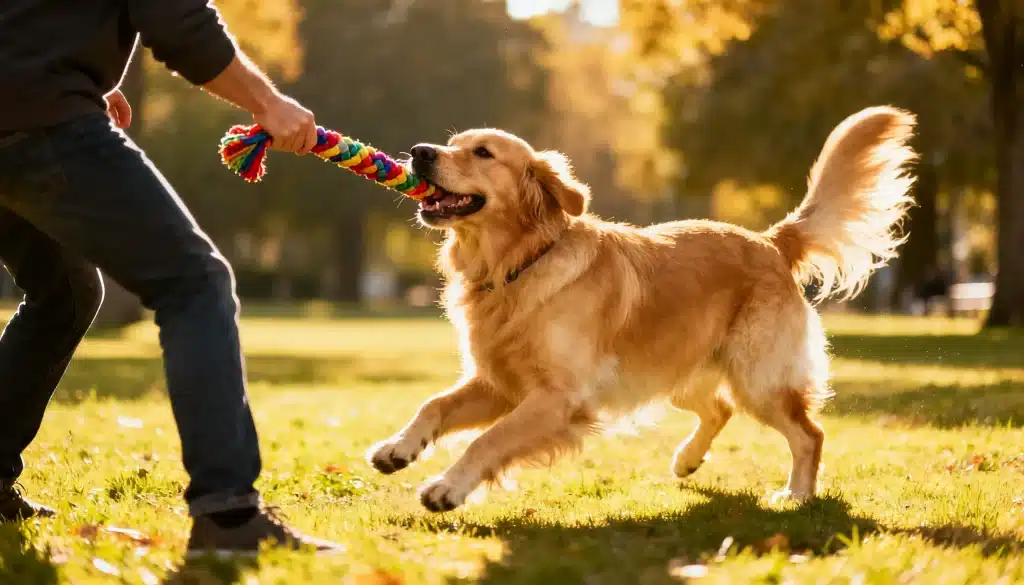
Tug of war is one of those games dogs never seem to get tired of. But why do dogs like tug of war so much?
This blog breaks down the real reasons behind this behavior. Dogs have been playing tug for generations, and the science backs it up.
So if your dog goes absolutely wild every time you grab a rope toy, you’re about to find out exactly why.
Why do Dogs Like to Play Tug of War
Most people think tug of war is just a simple game. But there’s actually a lot happening in your dog’s head.
1. It Taps Into Their Natural Instincts
Dogs are natural hunters. Even the most pampered house dog still carries those old survival instincts deep down.
When a dog grabs a rope and pulls hard, they’re doing something that feels completely natural to them.
It connects to something called prey drive. In the wild, dogs would grab, pull, and shake their prey. Tug of war mimics exactly that.
The back-and-forth motion, the resistance, the grip, it all triggers that built-in hunting behavior.
So when your dog digs their teeth into a toy and refuses to let go, they’re not being stubborn. They’re just being a dog.
2. It Feels Like a Social Bonding Activity
Many people think tug of war makes dogs competitive or dominant. But that’s not really how dogs see it.
For dogs, tug is more like teamwork. They’re doing something together with you.
That shared activity builds a real connection. It tells your dog, “Hey, I’m here with you. I’m engaged.”
And dogs pick up on that. Every time you play tug, you’re building a little more trust. It’s one of the simplest ways to strengthen your bond without even trying too hard.
3. It Provides Mental and Physical Stimulation
Tug of war isn’t just a workout for their body. It’s a workout for their brains, too. Dogs have to focus, react, and adjust their grip constantly during the game.
That keeps their mind sharp and engaged.
Physically, even a short five-minute tug session can burn a surprising amount of energy.
Dogs pull with their neck, shoulders, and legs all at once. It’s a full-body effort.
That’s a big reason why dogs like tug of war comes up so often, it checks two boxes at once. Mental and physical stimulation, all in one simple game.
4. The “Winning” Feeling Keeps Them Hooked
Dogs love a good challenge, and when they feel that resistance on the other end of the rope, it excites them.
And when they finally “win” or even feel like they’re close to winning, that feeling keeps them coming back for more.
It creates a loop. The challenge builds excitement. The excitement pushes them to keep playing. And the reward of that struggle makes the whole game feel worth it.
It’s not so different from how humans get hooked on games, either. The anticipation is half the fun.
Benefits of Playing Tug of War With Your Dog
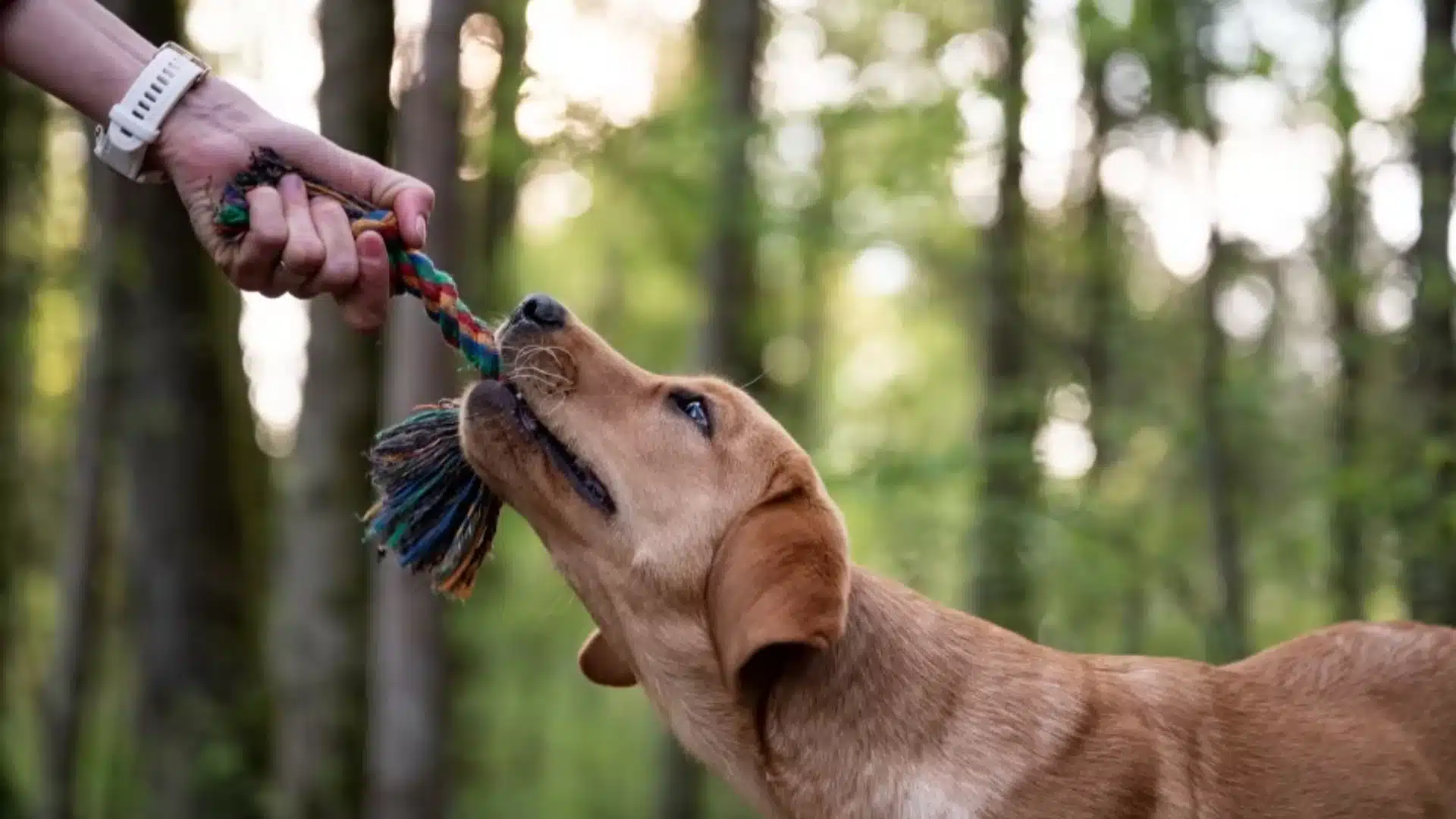
Tug of war isn’t just fun. It actually does a lot of good for your dog.
Strengthens Your Bond
Tug of war gives you and your dog something to do together. That shared playtime builds real trust.
Your dog learns that you’re fun to be around, and that goes a long way.
Improves Obedience and Control
Tug is actually a great training tool. You can practice commands like “drop it” and “leave it” right in the middle of the game.
Your dog learns to listen even when they’re excited. That kind of self-control carries over into everyday behavior.
Builds Confidence in Shy Dogs
For timid or anxious dogs, tug of war can be a confidence booster. Winning a round or even just holding on gives them a sense of achievement.
Over time, that adds up. Shy dogs often open up more through play than through any other method.
Provides a Healthy Outlet for Energy
Dogs need to move. Without enough activity, they get restless and sometimes destructive. A tug session burns energy fast.
It’s one of the quickest ways to tire out a high-energy dog without needing a long walk.
Does Playing Tug-of-War Make a Dog Aggressive?
Tug of war does not make dogs aggressive. That’s a myth.
Dog behaviorists have confirmed that a relaxed dog who responds to commands during play is simply having fun. The game isn’t the problem; the lack of rules is.
When there’s no structure, dogs start pushing boundaries. Some get overstimulated and struggle to calm down.
That’s when things get tricky. Watch for growling that turns stiff and intense, or possessive behavior after the game ends.
Those are signs your dog needs clearer boundaries, not a reason to stop playing altogether.
Should You Let Your Dog Win at Tug-of-War?
Many dog owners wonder about this. The short answer is yes, sometimes.
Letting your dog win keeps the game fun and rewarding for them. But there’s a balance to strike.
Why letting them win helps:
- It makes the game feel enjoyable, not frustrating.
- Gives shy or less confident dogs a real confidence boost.
- Keeps their motivation high and interest in the game strong.
When you shouldn’t let them win:
- If they start acting pushy or demanding outside of playtime.
- If they begin to feel like they’re always in charge.
- If they stop responding to your start and stop commands.
The key is simple. Let them win sometimes, but you always set the rules.
How Long Should You Play Tug-of-War With Your Dog?
There’s no fixed rule.
But getting the duration right matters for your dog’s body and their overall enjoyment.
Puppies: Keep it to 5 minutes max. Their joints and teeth are still developing. Light tension, short sessions, done.
Adult Dogs: 10 to 15 minutes works well for most. High-energy breeds like Border Collies may want more. Calmer breeds are happy with less.
Older Dogs: Short and gentle is the way to go. Their joints tire faster. Follow their pace, not yours.
How to tell when your dog is done:
- Heavy panting or slowing down.
- Losing interest in the toy.
- Walking away or lying down mid-game.
When you see these signs, stop. Rest matters just as much as play.
Tug of war works best as part of a bigger routine. Combine it with walks, fetch, or short training sessions. That keeps things fresh and gives your dog a well-rounded day.
Understanding why dogs like tug of war helps you use it wisely as one good option among many.
How to Properly Play Tug-of-War With Your Dog
Playing tug the right way keeps it fun, safe, and controlled.
How and What to do:
Choose the Right Toy: Go for a rope or rubber tug toy with some flexibility. Make sure it’s long enough to keep your hands clear of your dog’s mouth. Avoid anything too hard or too small.
Set Clear Rules: You start the game, not your dog. Use a “take it” command to begin and a “drop it” command to end it. Consistency here is everything.
Keep It Safe: Pull horizontally. No sharp jerking or side-to-side yanking. That puts strain on your dog’s neck. Steady resistance is always better.
Teach “Drop it” and “Take it”: Practice these commands regularly, even outside of playtime. A dog that responds quickly makes every tug session safer and more enjoyable.
Avoid These Mistakes:
- Letting your dog grab the toy without a cue.
- Allowing jumping or snatching at your hands.
- Letting sessions run too long.
Keep things calm, structured, and consistent. Every single time.
Conclusion
Dogs love tug of war for simple reasons. It feeds their instincts, burns energy, and brings them closer to you.
And when played with the right rules and the right toy, it’s one of the healthiest games you can share with your dog.
So grab that rope, set some boundaries, and let your dog have fun. A happy, well-exercised dog is really all that matters at the end of the day.
Frequently Asked Questions (FAQs)
1. How do Dogs Apologize?
Dogs apologize with droopy ears, tucked tails, gentle nudges, and by avoiding eye contact.
2. What is the Hardest Thing to Teach a Dog?
Recall getting your dog to come back to you every time, no matter the distraction, is widely considered the hardest command to teach.
3. What is “I Love You” in Dog Language?
A slow, relaxed blink combined with a wagging tail is your dog’s way of saying “I love you”.