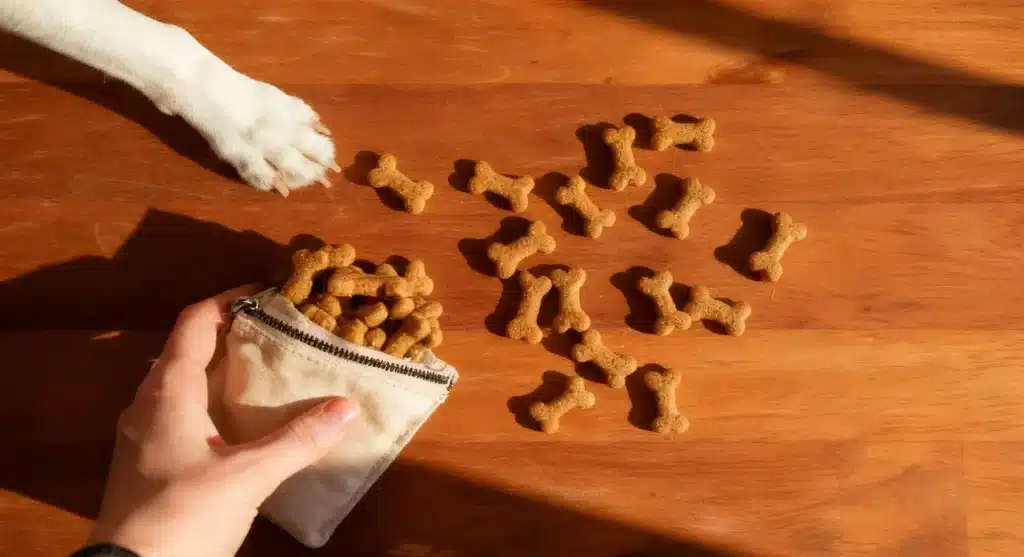
Training a dog is tough when your treats are stuffed in your pocket.
A good treat pouch fixes that fast.
This blog covers the best dog treat pouches out there, what makes them worth buying, and which ones you’ll love the most.
Why is a Dog Treat Bag Non-Negotiable?
Anyone who has trained a dog knows the struggle. Treats end up crushed in pockets, or worse, scattered on the ground.
A dog treat bag keeps rewards close, dry, and easy to grab.
Whether at the park or in the backyard, it makes training smoother and faster.
Dogs respond better when rewards come quickly. And that’s exactly what a good treat bag delivers, every single time.
Must-Have Features of Treat Pouch
Not all treat pouches are equal. These five features distinguish the keepers from the duds.
1. Quick-Access Closure
Drawstring pouches need both hands and waste precious seconds.
Magnetic closures snap open with one hand and close automatically, which is why trainers swear by them.
2. Hands-Free Wearing Options
If you need free hands for the dog’s leashes and commands. Look for waist straps, belt clips, or shoulder straps.
The best pouches offer at least two options.
3. Easy Cleaning
Fabric pouches must be machine washable; silicone ones are dishwasher-safe.
Anything marked wipe clean only will eventually smell like old kibble and regret.
4. Opening That Stays Open
Quality pouches have stiffeners keeping the opening wide. If it collapses like a plastic bag when you reach in, that’s a design fail.
5. Spill-Proof Design
Weak magnets pop open when you bend down.
Good pouches stay sealed until you deliberately open them, even when you’re jogging or kneeling.
Types of Best Dog Treat Pouch
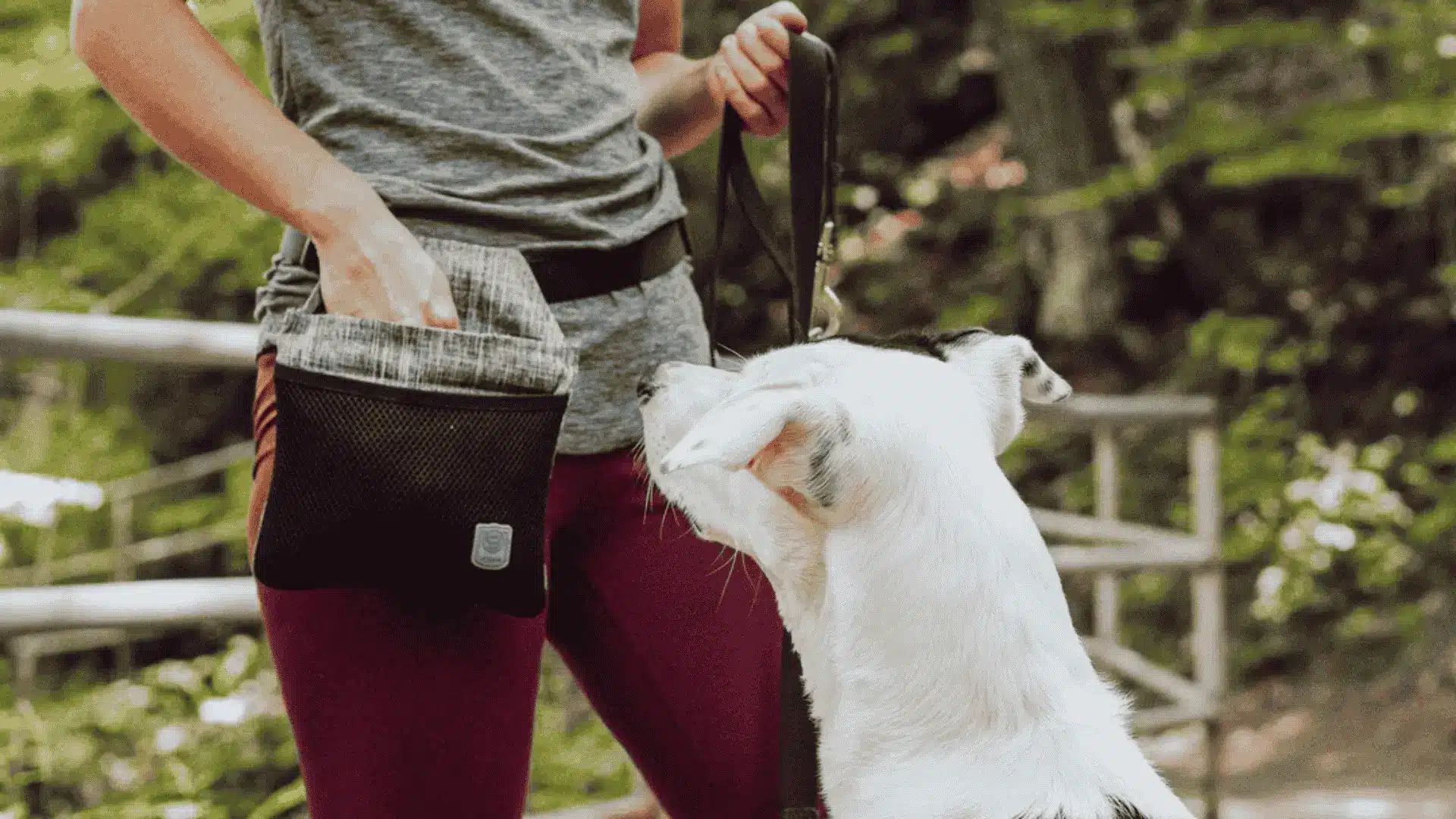
The treat-pouch aisle can be overcrushing, but most options fall into just a few categories.
By Material
- Fabric and Canvas Pouches: Lightweight and affordable, great for dry kibble. They eventually soak up oils and smell funky, though.
- Silicone Pouches: Dishwasher-safe and stain-resistant, perfect for wet or greasy treats. Heavier and pricier, but no more scrubbing.
By Design Style
- Minimalist Clip-On Pouches: Single compartment with a belt clip. Perfect for quick walks when you only need treats and maybe a poop bag.
- Utility Pack Style: Multiple compartments for phone, treats, poop bags, and water bottles. Great for longer outings or multiple dogs.
- Cross-Body and Shoulder Bags: Hang across your body and don’t look like dog gear. Slower access but more comfortable.
- Hybrid Fanny Packs: Stylish enough for everyday errands but functional for training. Perfect if you hate constantly switching bags.
The choice of fabric depends on your maintenance level and design on the convenience and the place of training.
Comparison Framework of Different Dog Treat Bags
Not sure which pouch fits your situation? This quick comparison shows what works best for different scenarios.
| Your Situation | Best Choice | Why It Works | Price Range |
|---|---|---|---|
| Active Training Sessions | Magnetic closure pouch | Instant one-handed access | $20-40 |
| Weekend Walks Only | Basic clip-on | Simple and affordable | $15-25 |
| Hiking Adventures | Utility pack | Room for water, gear, and treats | $35-55 |
| Fresh Treats (cheese, meat) | Silicone pouch | Won’t stain or smell | $40-65 |
| Multiple Dogs | Large capacity (16+ oz) | Fewer refills needed | $30-50 |
| Fashion-Conscious | Cross-body style | Doesn’t look like dog gear | $30-45 |
| Jogging/Running | Zippered utility pack | Stays secure, no bouncing | $25-45 |
| Budget Under $20 | Fabric with a drawstring | Affordable and functional | $12-20 |
Best Dog Treat Pouch Worth Buying
These pouches stood out for all the right reasons: easy access, solid build, and practical design that actually holds up during real training sessions.
1. Ruffwear Front Range Best Dog Treat Pouch
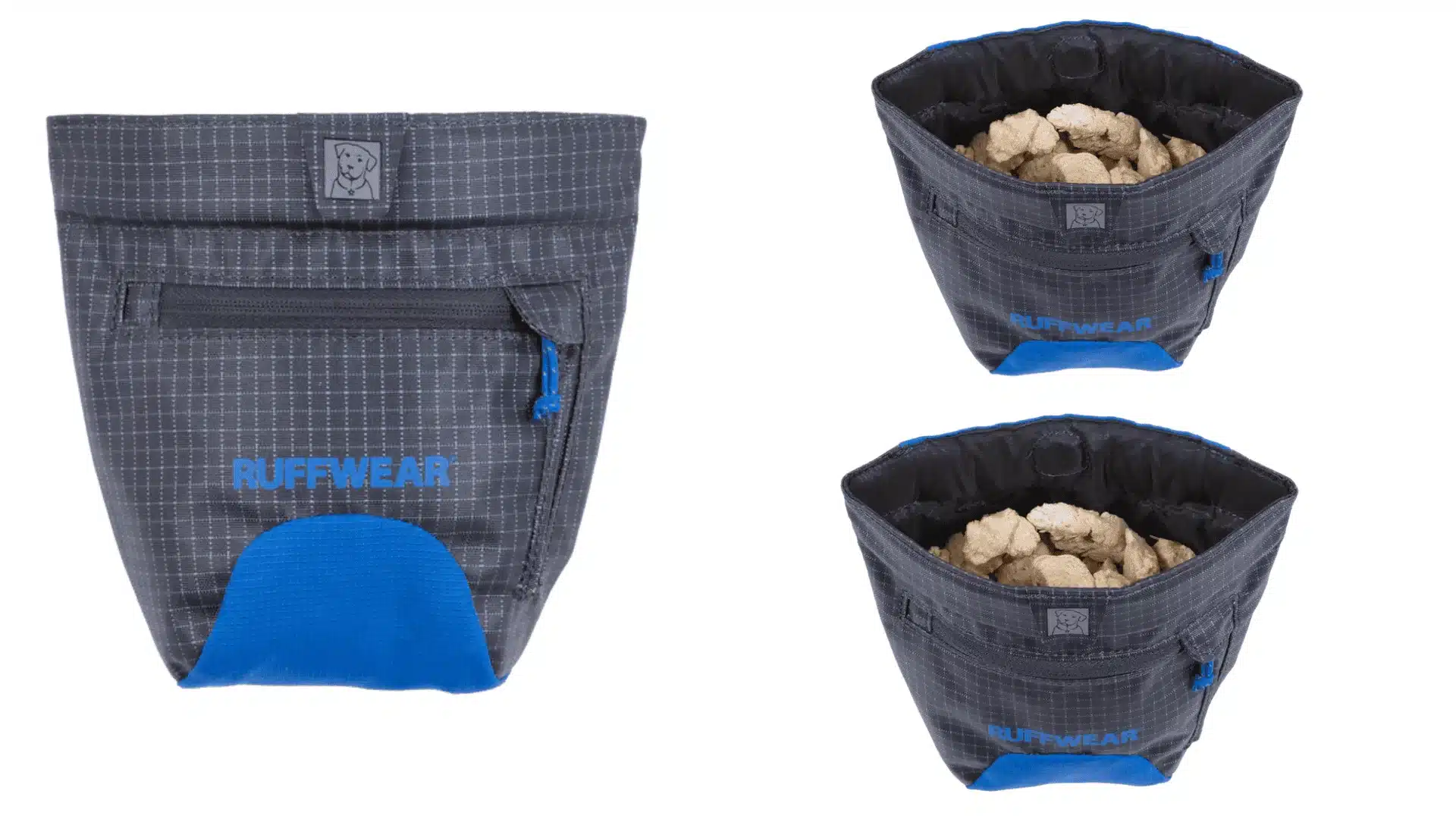
This Ruffwear Dog Bag clips easily to any waistband. Holds a good amount of treats and stays secure during active outdoor sessions.
A solid everyday pick.
2. PetSafe Treat Pouch Sport
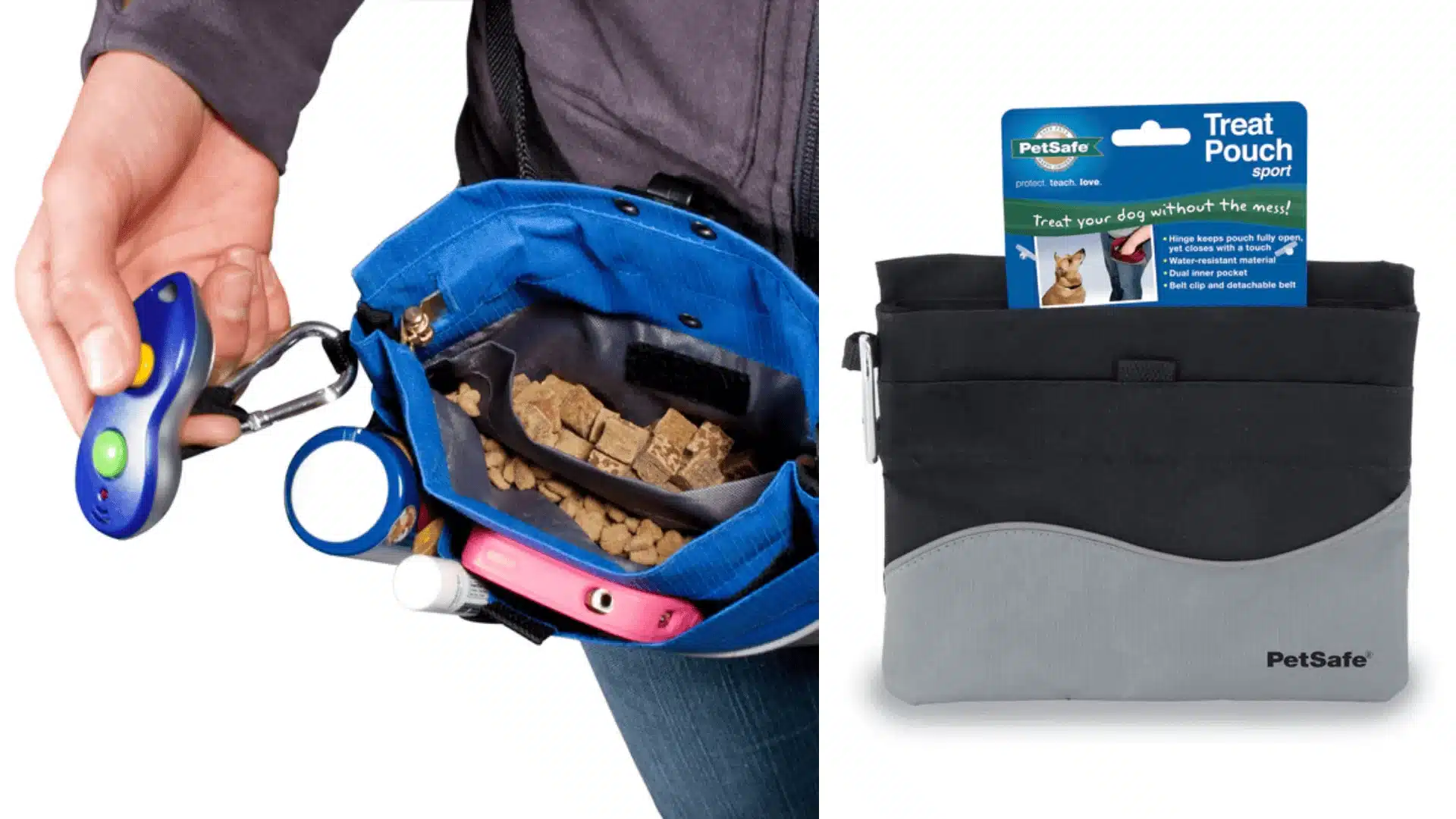
If you want something lightweight and simple to use, then you can try the PetSafe Treat Pouch.
The magnetic closure keeps treats fresh while giving you quick one-handed access exactly when your dog needs rewarding.
3. Doggone Good Rapid Reward Pouch
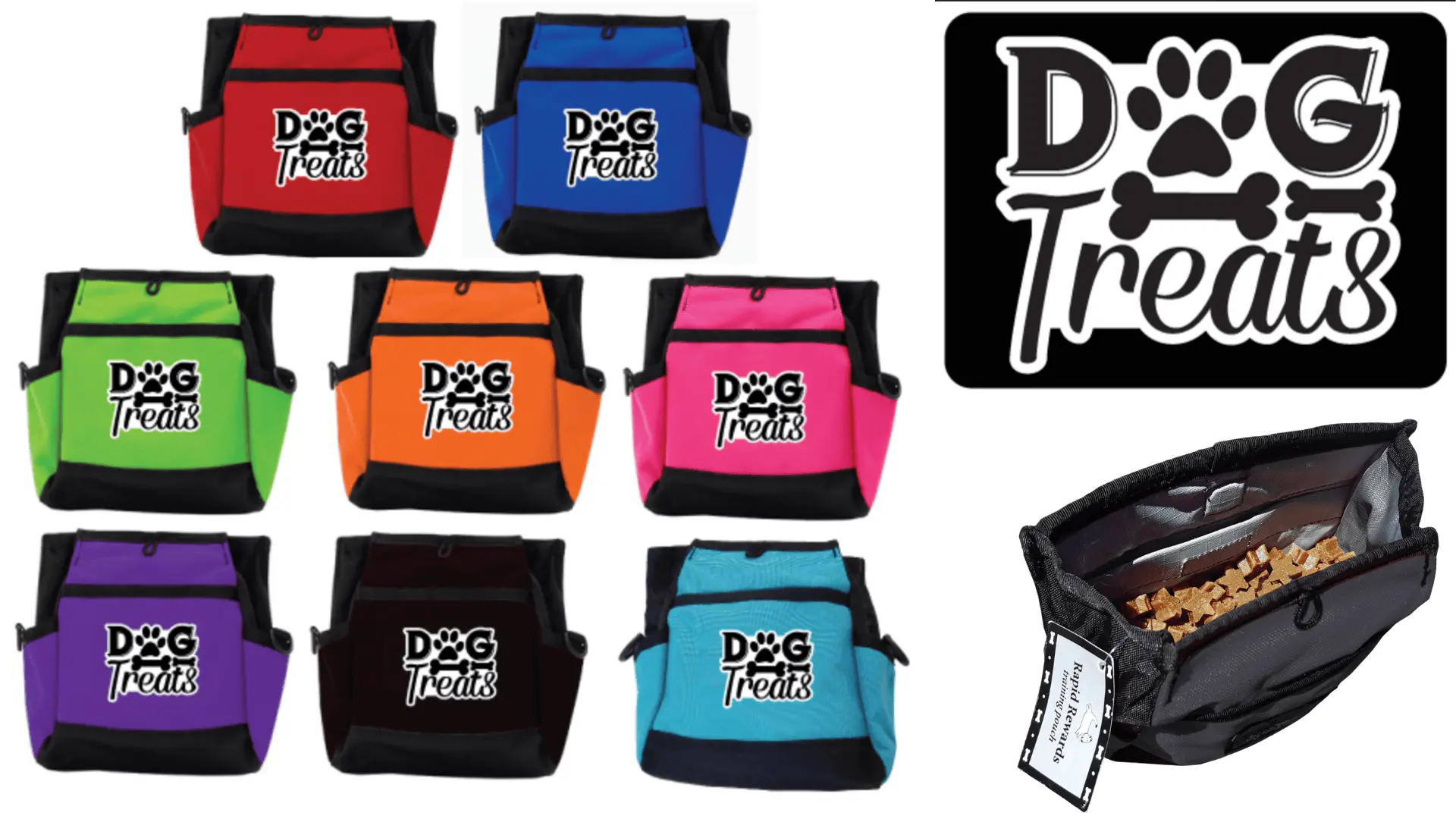
The wide opening of Doggone Rapid Pouch makes grabbing treats effortless.
Built with durable material that handles daily use without wearing down. Great for serious training sessions.
4. Paw Lifestyles Dog Treat Training Pouch
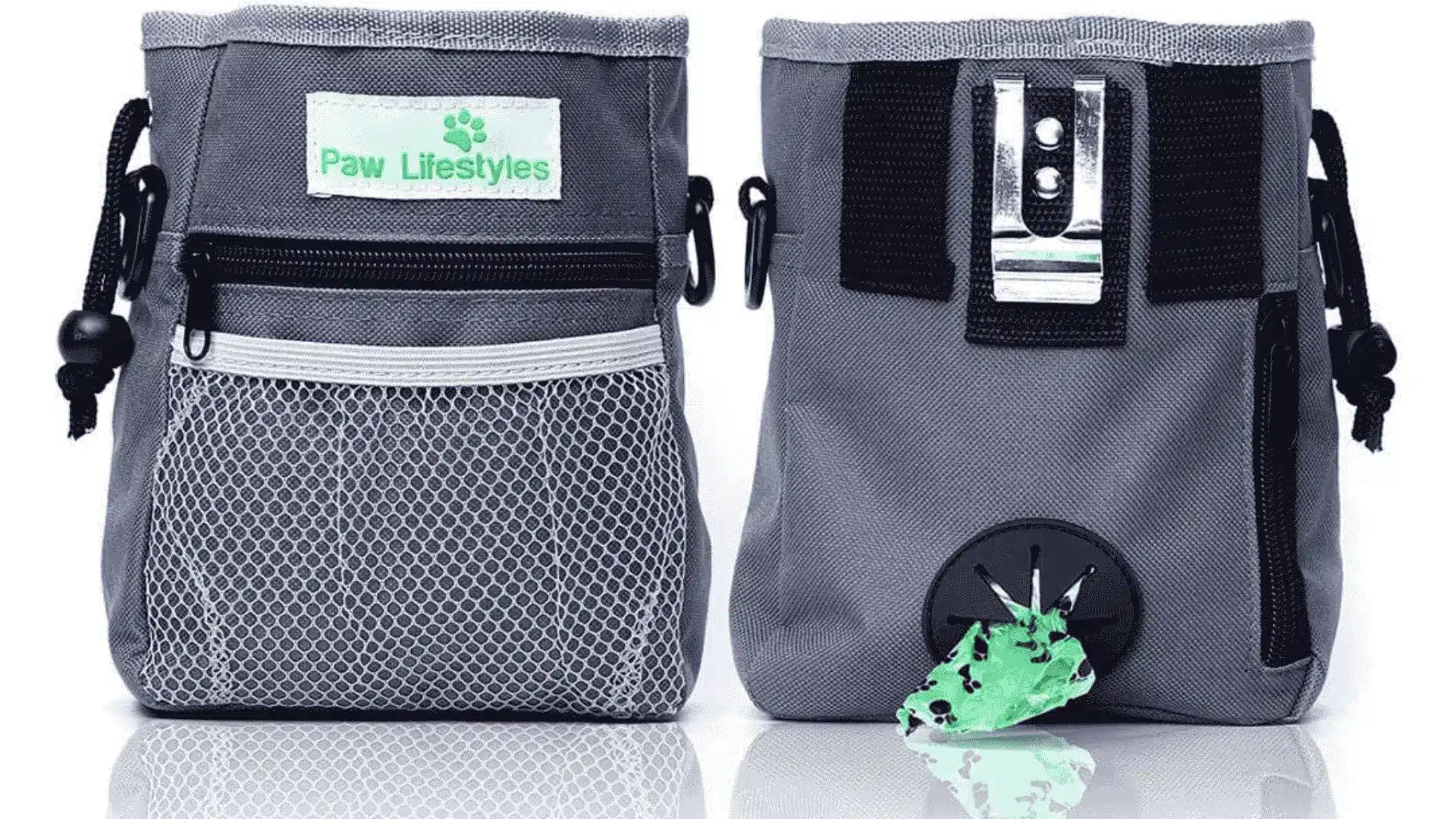
Paw Lifestyles Dog Pouch comes with a built-in waste bag dispenser.
Roomy enough for treats, keys, and your phone. A practical choice for longer walks.
5. Woofhoof Dog Treat Pouch
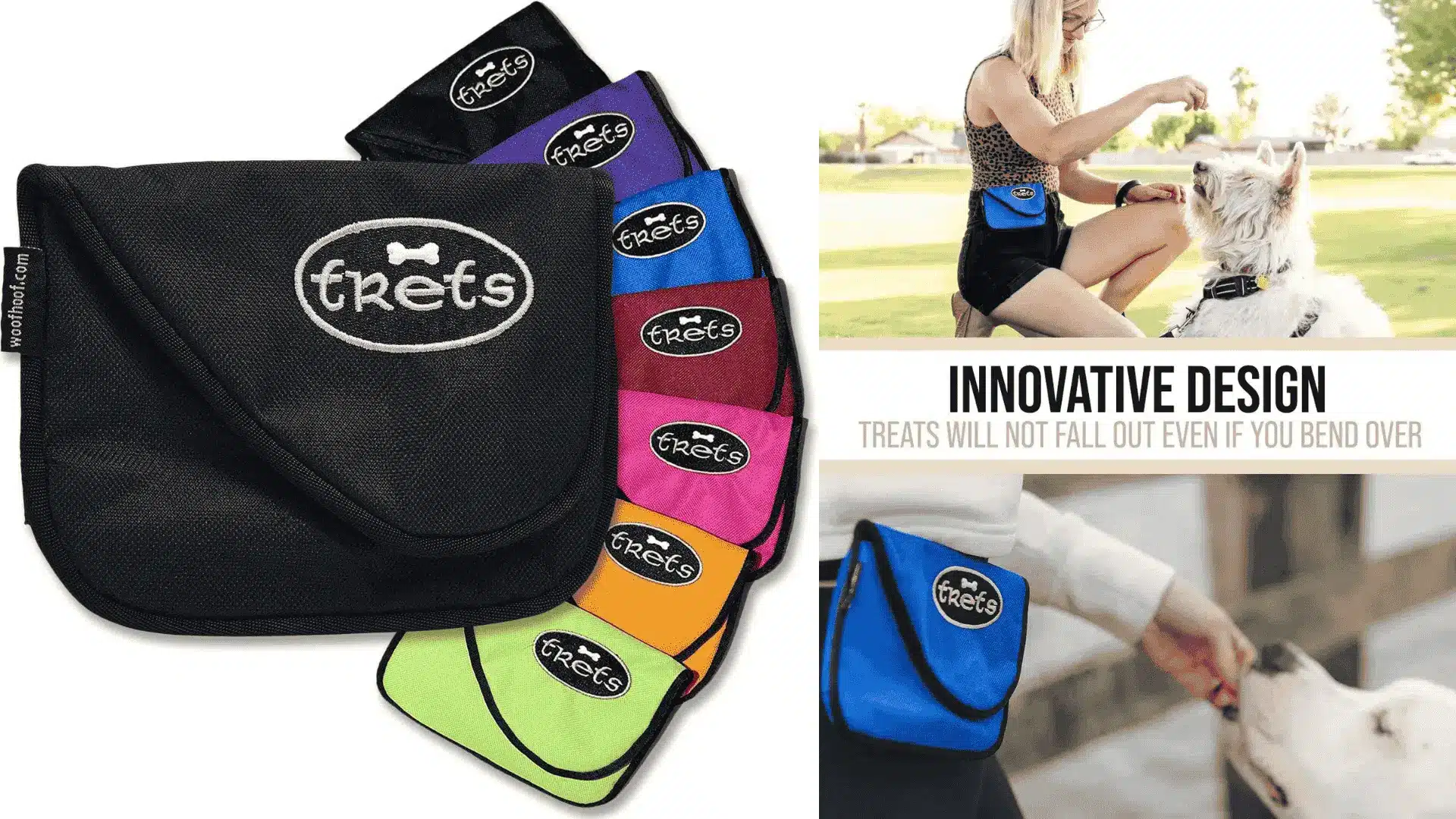
Woofhoof Dog Treat Pouch sits comfortably on your waist without bouncing around.
Easy to clean and holds its shape well. Works perfectly for both casual walks and focused training.
How to Clean a Dog Treat Pouch Properly?
Keeping a dog treat pouch clean is most important. Leftover crumbs and grease build up fast. And that can cause bacteria to grow inside the pouch.
Cleaning it regularly keeps it fresh and safe for every training session.
Here’s how to do it properly:
- Empty it out completely. Shake out every crumb before washing.
- Check the label; some pouches are machine-washable, while others require handwashing.
- Use warm, soapy water; a mild dish soap works well for most fabrics and silicone pouches.
- Scrub the inside; a small brush helps reach the corners where grease tends to collect.
- Rinse thoroughly, then air-dry completely.
Soap residue can upset a dog’s stomach if it gets on the treats, so wash it throughly.
Best Treats for Dogs
Not all treats work the same way. The right one keeps your dog focused and eager to learn.
Zuke’s Mini Naturals are small, soft, and low in calories.
Dog owners love how easy they are to carry and reward with during training.
Charlee Bear treats are crunchy, light, and simple.
These keep their pup focused without overfeeding during long training sessions.
Bil-Jac treats are soft, chewy, and hard to resist.
Dogs go crazy for them, and you will appreciate how quickly they can break them into smaller pieces.
Old Mother Hubbard Classic Treats
Old Mother Hubbard treats are baked, wholesome, and full of flavour.
You will love giving these as a well-earned reward after a good training session.
A Quick Note: Every dog is different. Always check the ingredient list before trying a new treat, some dogs have sensitivities that can cause reactions.
The Ultimate Buying Manual: Key Factors
Before you click add to cart, run through these factors. They’ll save you from buying the wrong pouch.
1. Your Training Style
Active training sessions demand magnetic closures for instant access. Occasional rewards during walks mean drawstring or zipper closures work fine.
2. Treat Type Matters
Dry kibble works in any pouch.
Cheese, hot dogs, or fresh meat require silicone, period. Using both, you need two pouches or a fabric pouch with a removable liner.
3. Capacity Needs
Quick walks need 8-12 ounces. Training sessions require 12-16 ounces.
Multiple dogs or all-day adventures mean 20+ ounces.
4. How You Want to Wear It
Waist straps distribute weight and stay put.
Belt clips work for lighter pouches, but they shift around. Cross-body straps are comfortable but slightly slower to access.
5. Extra Storage Requirements
Need phone and keys? Look for front zippered pockets.
Want poop bags separate? Built-in dispensers or D-rings work great. Trainers using clickers need side pockets.
6. Cleaning Method
Machine-washable fabric pouches are easiest. Dishwasher-safe silicone requires minimal effort. Wipe-clean only options eventually get gross.
7. Durability Expectations
Daily use means investing $40-60 for years of service.
Occasional weekend use means budget pouches at $15-25 work fine. Check for lifetime warranties.
Final Verdict
Finding the best dog treat pouch is not about buying the most expensive option. It is about what actually works for your life.
Training daily with fresh treats, then going for a silicone. Weekend walks with kibble, fabric ones work just fine.
Choose a pouch that fits your lifestyle. Your dog receives timely rewards, and you get clean laundry.
Everyone wins.
Frequently Asked Questions (FAQs)
1. Are Silicone Dog Treat Pouches Better than Fabric Ones?
Silicone pouches are easier to clean and more water-resistant. But fabric ones are lighter and more comfortable to wear during long training sessions.
2. Are There Dog Treat Pouches That Also Carry Poop Bags?
Yes! Many treat pouches come with a built-in poop bag dispenser.
3. Do I Need a Special Dog Treat Pouch for Clicker Training?
Not necessarily. Any pouch with a wide opening and easy access works well.