
Walking is simple, but when your dog pulls like it’s training for a sled race, every walk feels like a workout.
What if walks could actually be enjoyable, for both of you? The answer isn’t just a stronger leash, it’s a smarter approach
With the right approach, your dog can learn to walk calmly right beside you.
This blog covers why dogs pull, what mistakes to avoid, and simple techniques that actually work
What Does “Put Your Dog on a Leash” Mean?
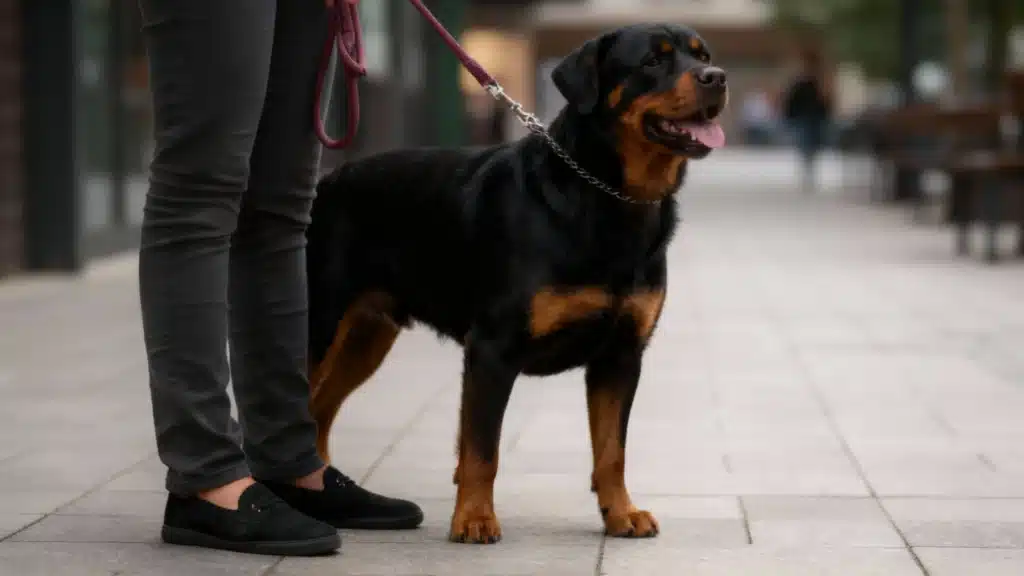
A leash isn’t just a rule; it’s one of the most important tools to train, as a dog owner.
When your dog is on a leash, you’re in control of where they go, what they approach, and how they interact with the world around them.
It keeps them safe from traffic, aggressive animals, and unpredictable situations they simply can’t understand.
Beyond safety, walking your dog on a leash builds trust between the two of you.
It teaches your dog to look to you for guidance rather than charging ahead on instinct.
In simple words, a leash protects your dog and the people around them.
Choosing the Right Leash and Collar/Harness
The right gear is important to keep your dog comfortable.
Select the harness size after measuring your dog to avoid any mismatch.
| Type | Pros | Cons | Best For |
|---|---|---|---|
| Standard Leash (4-6 ft) | Consistent control, easier training, quick reactions | Less freedom for sniffing | Training and busy areas |
| Retractable Leash | More roaming space | Encourages pulling, a thin cord causes injuries, breaks easily | Open, empty spaces only |
| Flat Collar | Simple, holds ID tags | Pressure on the neck, trachea damage with pullers | Calm, trained dogs |
| Front-Clip Harness | Redirects pulling, safe pressure distribution, discourages tugging | Takes time to fit properly | Dogs who pull |
| Back-Clip Harness | Comfortable, no neck strain | Can encourage pulling | Calm walkers |
| Nylon Leash | Affordable, colorful options | Rope burn on hands | Budget-friendly choice |
| Leather Leash | Comfortable grip, durable, softens with use | Higher cost | Long-term investment |
Choose padded options for sensitive skin, and always opt for metal hardware over plastic for safety.
Common Leash Behavior Issues and Solutions
Leash problems are beyond just pulling.
Lunging at Other Dogs or People
Your dog pulls aggressively toward other dogs, people, or moving objects like bikes and joggers.
How to fix?
- Increase the distance from triggers until your dog stays calm.
- Reward attention on you before they react.
- Gradually decrease the distance as they improve.
- Consider crossing the street when necessary to avoid confrontations.
Excessive Barking on Walks
Your dog barks at everything, from dogs, strangers, noises, to seemingly nothing at all.
How to fix?
- Identify what triggers the barking (fear, excitement, or frustration).
- Stop walking immediately when barking starts.
- Wait for quiet, then reward and continue.
- Don’t yell. It adds to the noise and excites them more.
Leash Reactivity and Aggression
Your dog shows teeth, growls, or acts aggressively when on leash, but might be fine off-leash.
How to fix?
- Understand that this often stems from fear or a sense of being trapped.
- Create more space between your dog and triggers.
- Use high-value treats to create positive associations.
- Consider working with a professional trainer for serious cases.
Some owners turn to shock collars to control their dog’s behaviour, but vets do not recommend them.
Constant Sniffing
Your dog goes back and forth, stopping to sniff every two seconds.
How to fix?
- Designate “sniff time” and “walk time” portions of your outing.
- Use a release word like “go sniff” when it’s okay to look around.
- Keep them moving during training portions with treats and encouragement.
- Exercise before training walks makes them tired and concentrated. It always helps.
Freezing or Refusing to Walk
Your dog plants themselves and won’t budge, especially in new places.
How to fix?
- Check for fear triggers, such as loud noises or scary objects.
- Use treats to lure them forward a few steps at a time.
- Never drag. It increases fear and damages trust.
- Rule out pain or discomfort with your vet if it’s a sudden behavior.
Punishment-based corrections can suppress visible aggression without resolving the underlying anxiety, which sometimes makes the dog more unpredictable, not less.
Simple Steps to Train Your Dog
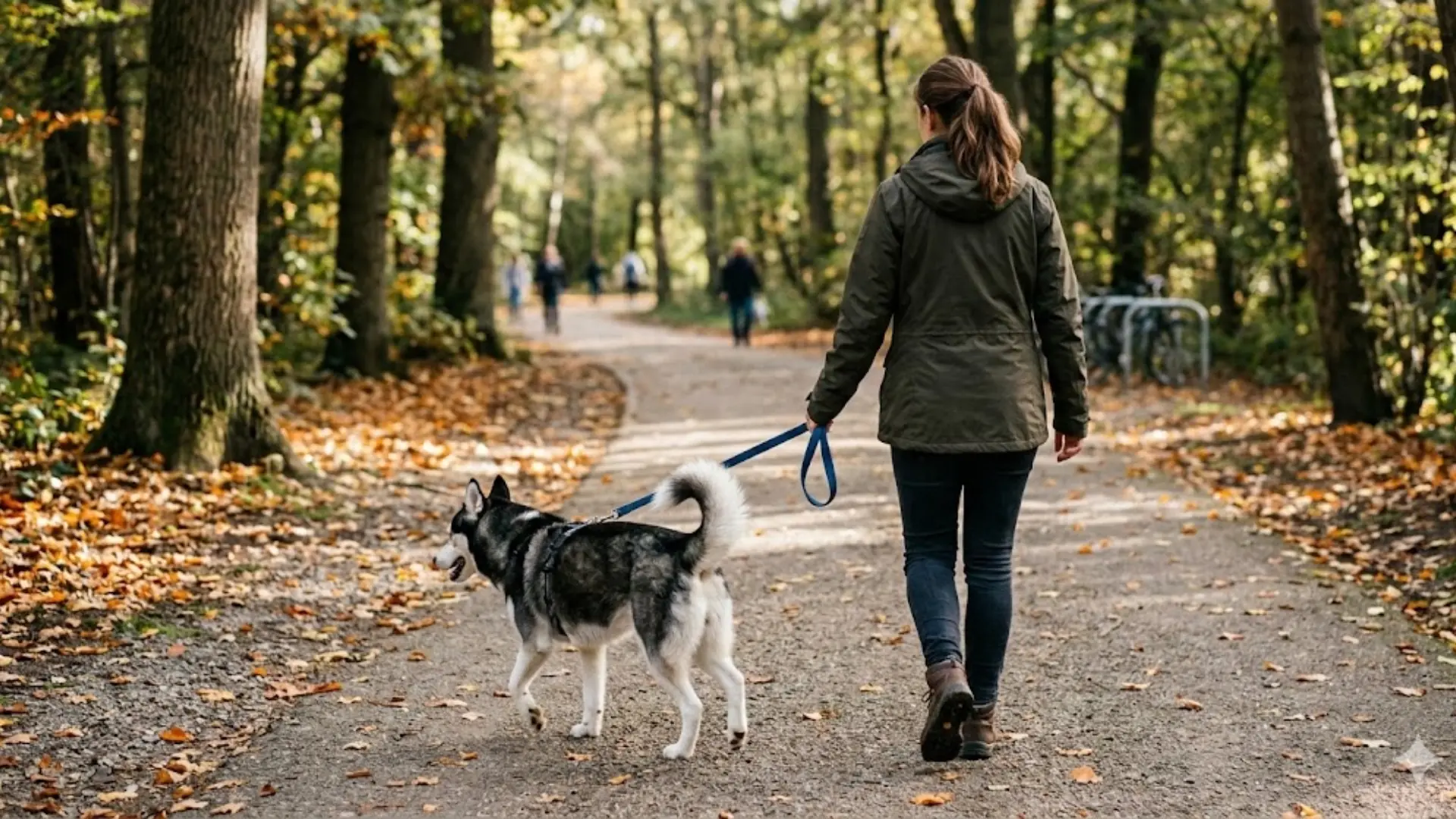
Training your dog to walk calmly takes patience, but these steps make it manageable.
Step 1: Start Indoors
Begin training indoors or in your backyard where your dog feels comfortable and focused.
Practice in short 5-10 minute sessions.
Once your dog consistently walks without pulling in a calm space, gradually introduce mild distractions, such as a quiet street or an empty park.
Step 2: Use the Stop-and-Go Method
The moment your dog pulls, and the leash tightens, stop walking completely.
Stand still like a tree. Don’t yank, don’t say anything, just wait.
When your dog looks back at you, or the leash loosens, praise them calmly and start walking again.
Repeat this every single time they pull.
Step 3: Reward Loose-Leash Walking Consistently
Carry small, soft treats your dog loves.
Every few steps, they walk beside you without pulling, then immediately give a treat.
Reward frequently at first, even every two or three steps.
As they improve, stretch the time between treats.
Notice and catch them right before they pull.
Step 4: Practice the “Check-In” Command
Teach your dog to look at you on cue during walks.
Say their name or use a word like “focus,” and reward them instantly when they make eye contact.
Practice this often, especially before distractions like other dogs or squirrels appear.
A dog checking in with you is less likely to pull because their attention stays on you instead of whatever’s ahead.
Step 5: Stay Consistent with Your Expectations
If you sometimes allow pulling, like when you’re in a hurry, your dog gets confused about the rules.
Consistency is everything.
Every walk should reinforce the same lesson.
Get other family members on board, too, and this is very important.
What is the Best Dog Leash for Your Dog?
Not all leashes are created equal. The right one depends on your dog’s size, temperament, and how they behave on walks.
Some famous tried and tested options below:
Built for dogs and active owners, the Ruffwear Knot-a-Leash is made from climbing-grade rope.
It’s durable, lightweight, and comfortable to hold, even on long walks.
This leash has a built-in bungee section that absorbs sudden jolts when your dog lunges.
Great for strong pullers, it reduces strain on both your arm and your dog’s neck.
3. Mighty Paw Reflective Dog Leash
A solid everyday leash with reflective stitching for low-light visibility.
It’s padded, provides comfort, has a sturdy clasp, and holds up well for medium to large-sized dogs.
Simple, affordable, and reliable. The PetSafe Nylon Leash is an option for calm walkers.
It comes in multiple lengths and colors, making it a practical everyday choice.
5. Blue-9 Multi-Function Leash
Incredibly flexible, this leash can be worn and adjusted in multiple ways, be it hands-free, double-dog, or standard.
Ideal for training sessions that require flexibility and control.
6. Max and Neo Reflective Leash
A durable leash with strong reflective thread woven throughout. For every leash sold, the brand donates one to a dog rescue.
It has a great quality and a good cause behind it.
This is a multi-function leash that works hands-free around the waist.
It’s built tough, has multiple clip points, and is a great pick for active owners who like to run with their dogs.
Common Mistakes Dog Owners Make
| Mistake | Why |
|---|---|
| Using a retractable leash for training | Teaches dogs that pulling is equal to freedom |
| Pulling back when the dog pulls | Creates a tug-of-war game, which means more pulling |
| Yelling or getting frustrated | Dogs sense tension and become more anxious |
| Using low-value treats | Use special rewards |
| Skipping rewards for good behavior | Dogs need positive reinforcement to know they’re doing it right |
| Holding the leash too tight | Signals anxiety and removes your dog’s ability to make good choices |
| Giving up too quickly | Progress isn’t linear; consistency eventually pays off |
Conclusion
Walking your dog on a leash doesn’t have to feel like a battle every single time you step outside.
With a little patience, consistency, and the right techniques, those chaotic, arm-yanking walks can become something enjoyable for both of you.
It won’t happen overnight, but every small win adds up faster than you’d think.
Remember, leash training isn’t about controlling your dog. It’s about building a language that the two of you share.
The more your dog understands what you expect, the more freedom and trust you can give them.
Frequently Asked Questions (FAQs)
1. What is the Hardest Command to Teach a Dog?
“Heel” is considered the hardest command. It requires your dog to walk calmly beside you, ignoring all distractions.
2. What is the Number One Food You Should Never Feed Your Dog?
Grapes and raisins. Even small amounts can cause sudden kidney failure in dogs, regardless of breed or size.
3. What is the 2-Finger Collar Rule?
You should be able to slide exactly two fingers between your dog’s collar and their neck. Any tighter risks choking; any looser, and they can slip out.
4. What are the Signs of an Unhappy Dog?
Watch for excessive barking, destructive behavior, loss of appetite, hiding, low energy, and avoiding eye contact.