Have your dog’s bottom teeth always stuck out a little?
This sight is more common in dogs than most people think, which often leads many dog owners to spot it and panic.
Sometimes it’s harmless. Sometimes it needs attention. Knowing the difference is important to help your dog in time.
What is an Underbite?
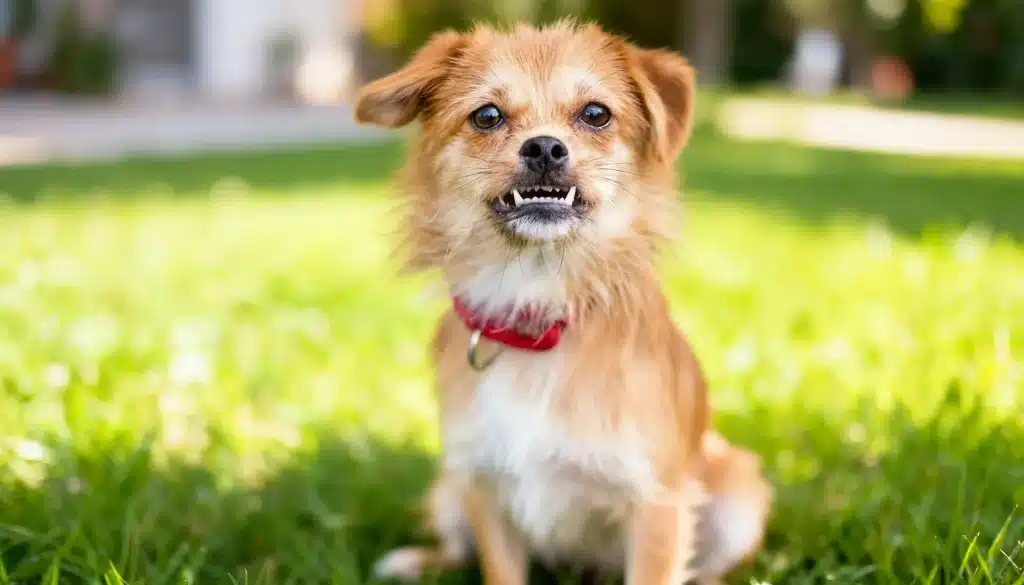
An underbite happens when a dog’s lower jaw sticks out further than the upper jaw.
This causes the bottom teeth to sit in front of the top teeth. It’s a dental condition that affects many dogs, and vets call it Class 3 malocclusion.
Some dogs are born with it, while others develop it as they grow older.
It can be a minor cosmetic issue or something that needs medical attention.
The Causes of an Underbite
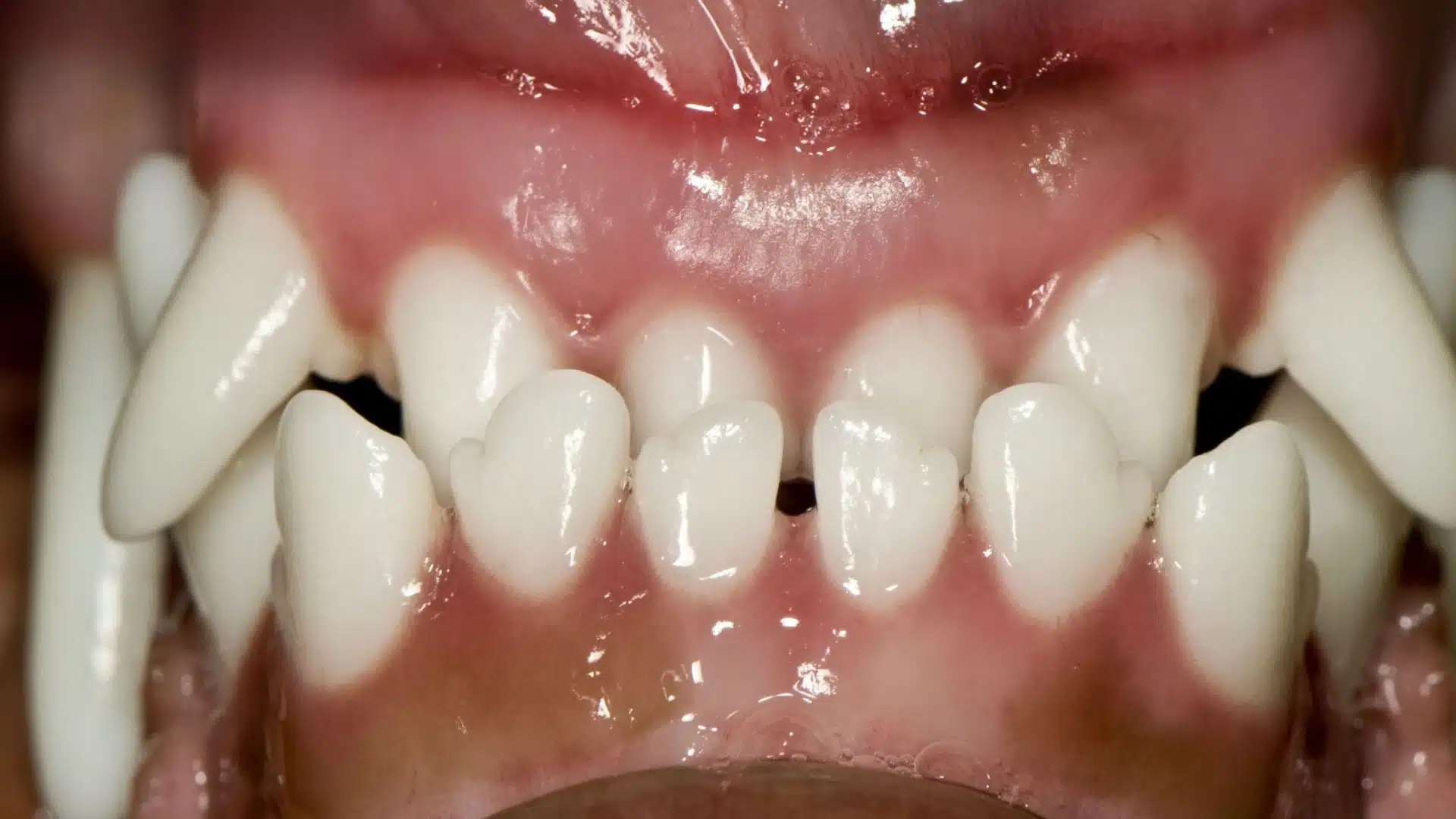
An underbite in dogs doesn’t always have one clear cause.
Several factors can lead to this condition. Some are natural, while others develop over time, affecting the teeth alignment of your dog.
Genetics
Genetics plays a very common role in causing underbites.
If a dog’s parents had an underbite, there’s a good chance the pup will too. Certain breeds are genetically built with shorter upper jaws.
This naturally causes the lower teeth to stick out further.
Injury or Trauma
A physical injury to the jaw can sometimes result in an underbite.
If a puppy injures its jaw during its growing phase, the bones may heal unevenly. This can push the lower jaw forward.
The forward movement creates a noticeable misalignment over time.
Abnormal Tooth Development
Sometimes, baby teeth don’t fall out the way they should.
When old teeth hang around too long, they can push the jaw out of position. This forces the lower jaw forward.
This leads to an underbite as the dog ages.
Symptoms in Dogs with Underbites
Not every underbite dog shows obvious symptoms.
Some dogs live comfortably with it, while others struggle daily. Knowing what to look for helps owners catch the problem early.
Visible Jaw Misalignment
The most obvious symptom is a visibly misaligned jaw.
The lower jaw sticks out further than the upper jaw. In some dogs, the bottom teeth are clearly visible even when the mouth is closed.
This is the first sign of an underbite that you will notice.
Difficulty Eating or Chewing
Sometimes these dogs struggle to chew their food properly.
The misaligned teeth don’t meet the way they should. This makes it hard to break down food into pieces.
Some dogs may chew on one side of their mouth or eat much more slowly than usual.
Excessive Drooling
An underbite can affect how well a dog closes its mouth.
When the jaw doesn’t align properly, saliva tends to build up. This leads to increased drooling.
If a dog suddenly starts drooling a lot more, the underbite could be the reason.
Gum and Teeth Irritation
Misaligned teeth can rub against the gums and soft tissue inside the mouth.
This constant rubbing causes irritation and soreness. Over time, it can lead to redness, swelling, or even small sores inside the mouth.
That makes eating uncomfortable for the dog.
Treatment for Dogs with Underbites
Treating an underbite in dogs depends on how severe the condition is.
Mild cases may not require any treatment. But more serious cases do need medical attention as soon as they are diagnosed.
Tooth Extraction
In some cases, the vet may recommend removing certain teeth.
This is usually done when the misaligned teeth are causing pain or damage to the gums. Removing the problem teeth gives the mouth more room.
Tooth extraction significantly reduces the dog’s discomfort.
Braces or Orthodontic Devices
Yes, dogs can get braces, too.
Orthodontic devices help reposition the teeth and jaw over time. This option works best for younger dogs whose jaws are still growing.
A vet dentist will monitor the progress regularly and adjust the device as needed.
Surgery
In severe cases, surgery may be the only option. A vet surgeon will correct the jaw alignment through a carefully planned procedure.
This is usually recommended when the underbite causes serious eating problems or constant pain.
Recovery takes time after surgery but most dogs do well afterward.
Problems Associated with Underbites if Left Unchecked
An underbite can lead to several health problems if left unchecked. Some issues develop slowly over time, while others show up early.
1. Dental Disease
Misaligned teeth are harder to clean properly.
Food and bacteria tend to get trapped in the gaps between the teeth. Over time, this buildup leads to plaque, tartar, and eventually gum disease.
Regular dental checkups are really important for an underbite dog.
2. Mouth Sores and Ulcers
When teeth don’t align correctly, they can dig into the soft tissue inside the mouth.
This constant contact causes painful sores and ulcers to form.
Left untreated, these sores can become infected, making eating very uncomfortable for the affected dog.
3. Difficulty Eating and Weight Loss
When chewing becomes painful, dogs tend to eat less.
Over time, this can lead to noticeable weight loss, poor nutrition, and a dog that isn’t eating properly will gradually lose weight and may suffer from nutritional deficiencies.
4. Chronic Pain and Discomfort
An untreated underbite can cause ongoing pain in the jaw and mouth.
This constant discomfort affects a dog’s mood and behavior, making them less playful or more irritable.
Just simply because their mouth hurts every single day.
5. Tooth Wear and Breakage
Misaligned teeth grind against each other in ways they shouldn’t.
This uneven contact wears the teeth down faster than normal. In some cases, teeth can crack or break entirely.
This makes them prone to infection and further dental complications.
Is it Bad for Dogs to Have an Underbite?
Not every underbite is a cause for concern.
For some breeds, like Bulldogs and Boxers, it’s completely normal. These dogs live happy, healthy lives without any issues.
But that’s not always the case.
When the misalignment is severe, it can lead to real problems. Teeth may dig into the gums, making eating painful.
Dental disease can develop over time if the teeth aren’t cleaned properly.
The best way to know if an underbite is harmful is to visit a vet. Early detection always makes managing the condition easy.
What is a Stage 3 Underbite?
A Stage 3 underbite is also known as Class 3 malocclusion.
It is when the lower jaw sits noticeably further forward than the upper jaw. It’s the most severe form of underbite seen in dogs.
In this case, the lower teeth sit completely in front of the upper teeth.
This condition can be genetic or develop due to injury and abnormal tooth growth. Some breeds are naturally prone to it.
When left untreated, a Stage 3 underbite can cause serious problems.
These include painful mouth sores, difficulty eating, and long-term dental disease, and a vet should assess the condition as early as possible.
Catching it early gives the dog the best chance of a comfortable, pain-free life.
Famous Breeds of Dogs with a Natural Underbite
Some dog breeds are simply more likely to have underbites than others.
It’s often a natural part of how they’re built, and these famous dog breeds make even an underbite look adorable.
1. Bulldog
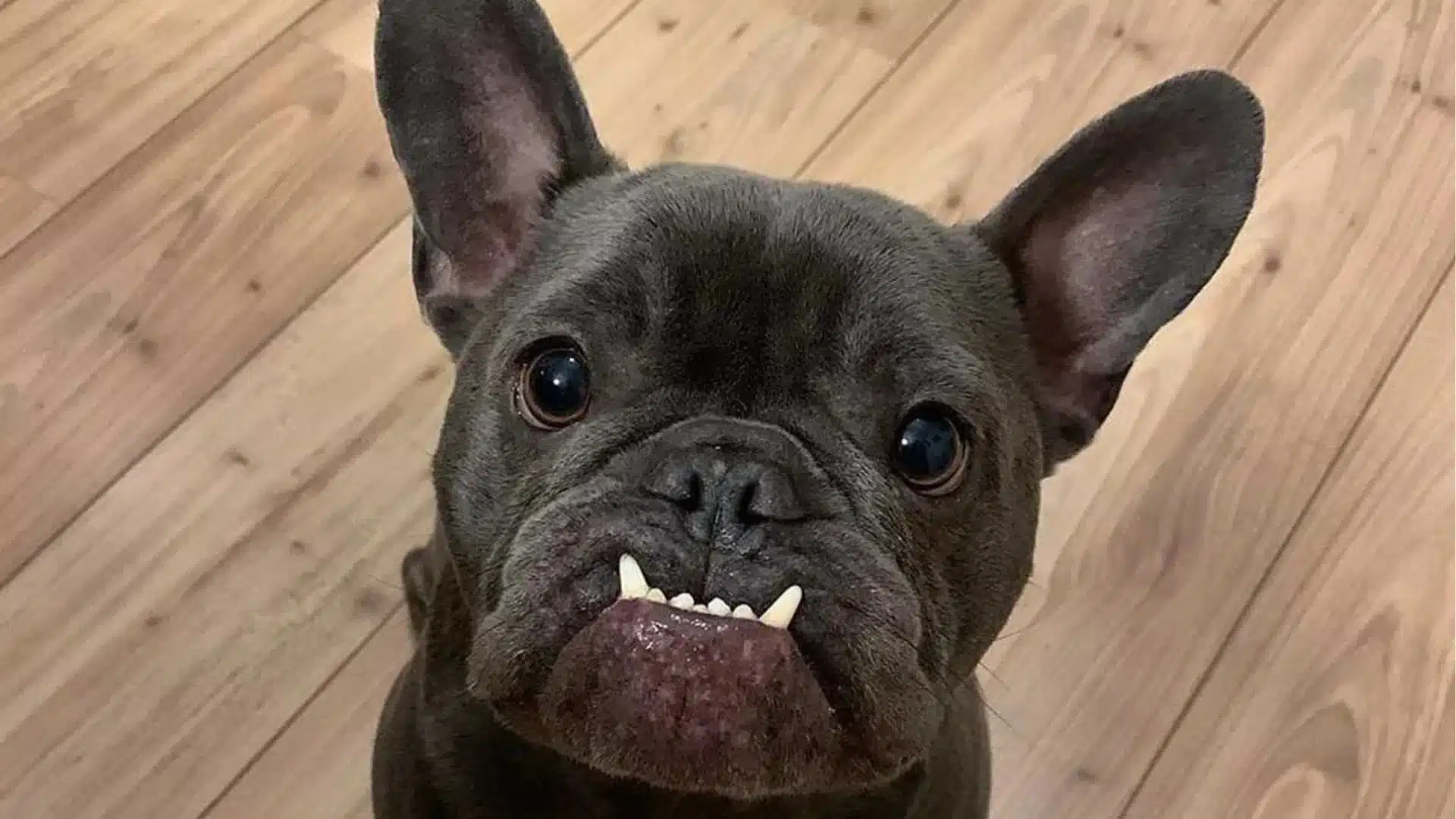
Bulldogs are probably the most well-known breed with an underbite.
Their lower jaw naturally extends further than the upper jaw. This gives them that signature pushed-in face look.
For Bulldogs, an underbite is normal and part of the breed’s standard appearance.
2. Boxer
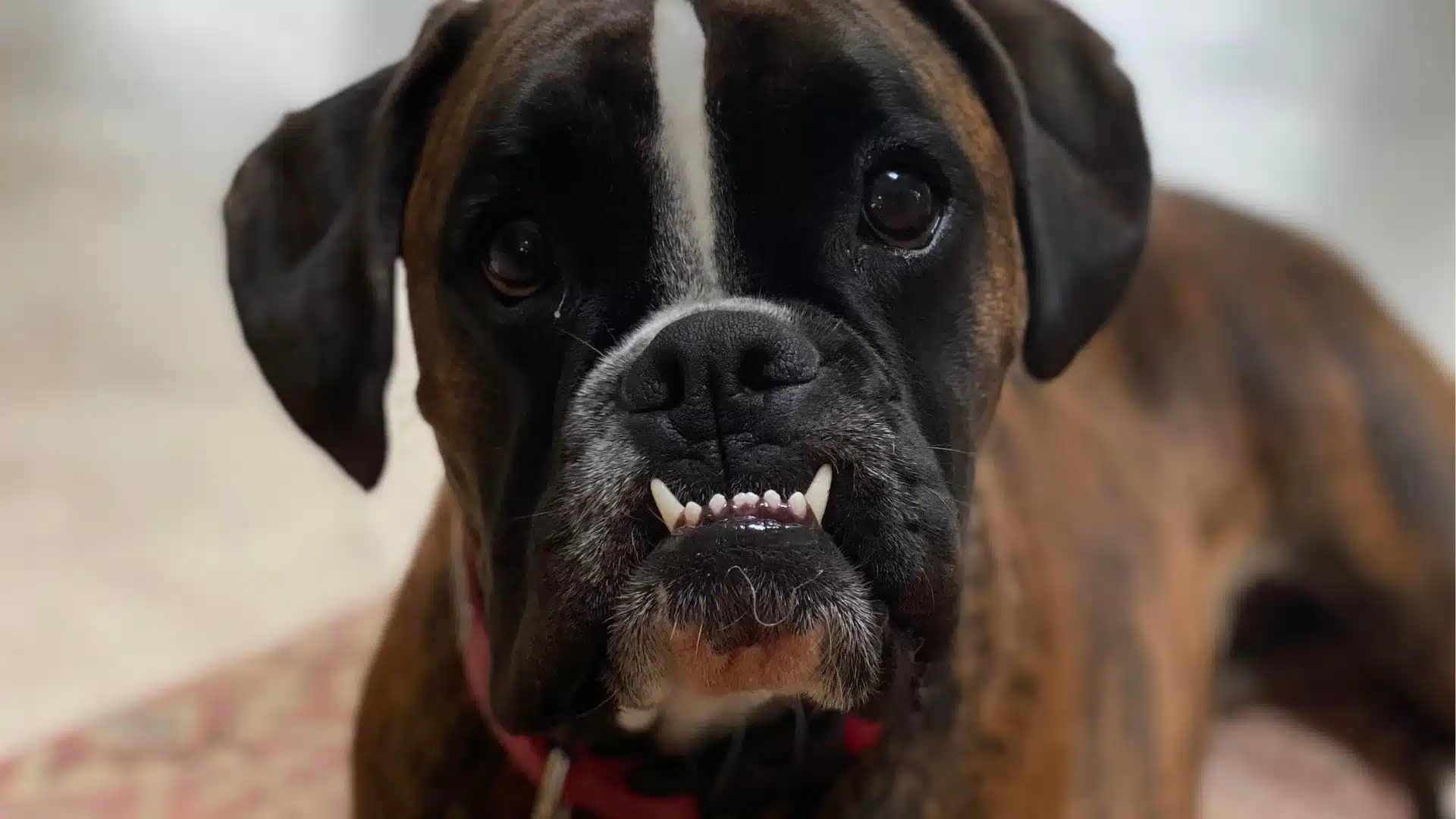
Boxers are another breed that commonly has an underbite.
Their lower jaw is slightly longer than the upper jaw by nature. This gives them a strong, distinctive facial structure.
Most Boxers live comfortably with their underbite without any problems.
3. Shih Tzu
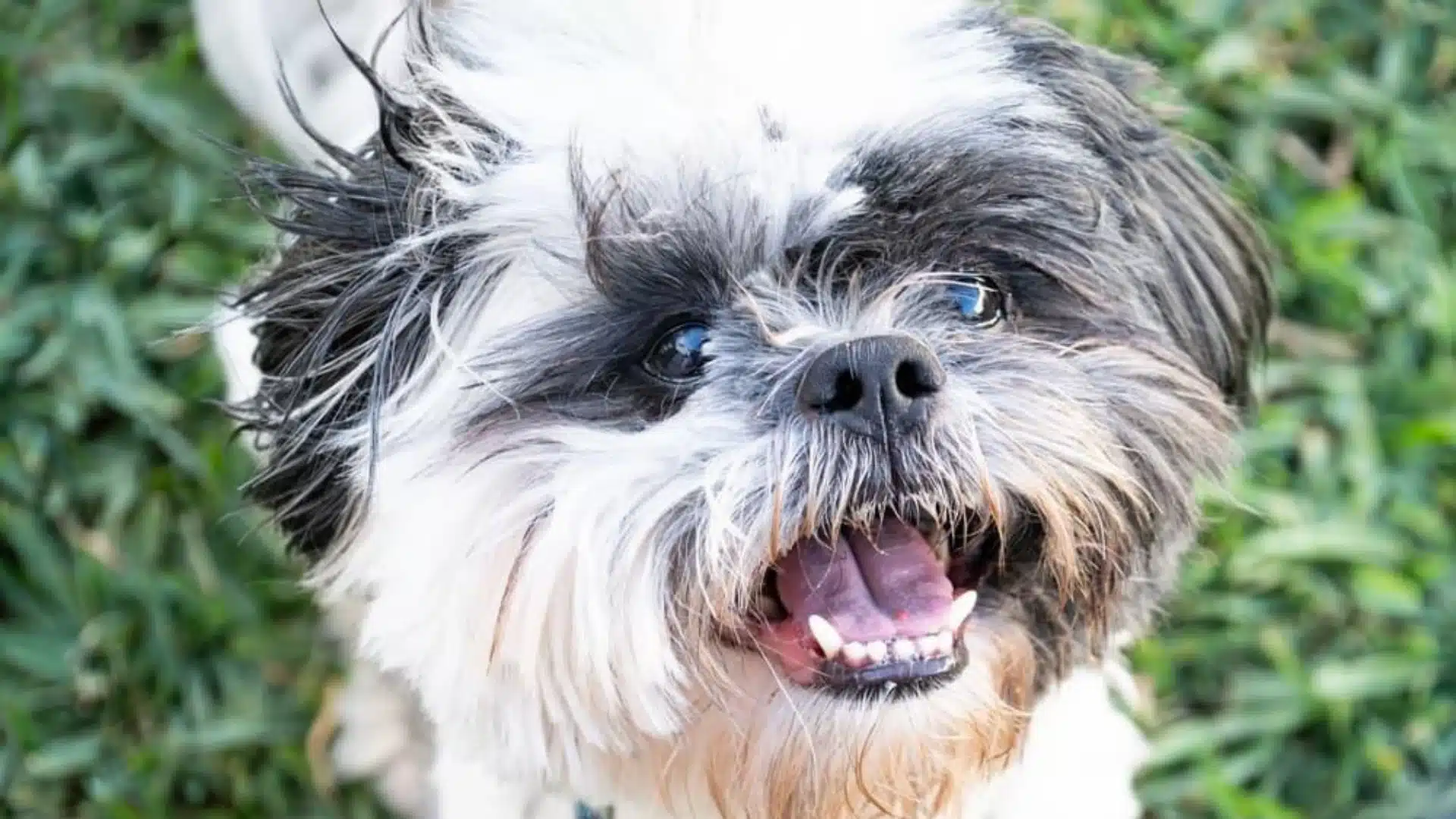
Shih Tzus are small dogs with big personalities and often a noticeable underbite.
Their flat facial structure naturally pushes the lower jaw forward. Because of their small mouths, though, dental crowding can sometimes be an issue.
Regular vet checkups help keep their teeth and gums healthy.
Final Thoughts
Underbites in dogs are more common than you might think.
For some breeds, it’s just a natural part of who they are. For others, it may need a little medical attention along the way.
It’s important to know what to look for.
Spotting the symptoms early makes a big difference, along with regular vet visits and good dental care, which go a long way in keeping these dogs healthy and comfortable.
Frequently Asked Questions (FAQs)
1. Can an Underbite Fix Itself?
Rarely. Most underbites don’t correct on their own. Mild cases may not need treatment, but severe ones require a vet’s help through extraction, braces, or surgery.
2. Do Underbites Get Worse with Age?
They can. If left untreated, misaligned teeth can cause more damage over time. Regular vet checkups help monitor the condition and prevent it from getting worse.
3. Do Dogs with Underbites Have Trouble Eating?
Some do. Misaligned teeth make chewing harder. Dogs may eat more slowly or favor one side of their mouth. Severe cases may need treatment.