

As a pet owner, choosing the right food for your dog is one of your most important responsibilities.
Among the many options available in the market, kibble is the most common choice for pet owners. Yet, it is also the most debated one.
Some people believe it is the healthiest choice, while others do not. So, is kibble bad for dogs?
Let’s read about it.
What Does Kibble Mean?
Kibble is a popular dry dog food. It is made by processing ingredients such as meat, grains, and vegetables, along with added nutrients.
It has become a popular choice for its convenience, long shelf life, affordability, and ability to provide a complete, balanced diet for dogs.
Is Kibble Bad for Dogs?
Kibble is not necessarily bad for dogs.
Its impact on your dog depends on the quality of the product, the digestive system of an individual dog, and how it is included in your dog’s diet.
Many dogs stay healthy on kibble but face problems when low-quality products are used, when given without consideration, or when the balance is inappropriate.
So, it’s convenient but not ideal for long-term health.
Benefits of Kibble
Kibble is a popular choice among dog owners because it offers several key benefits in terms of health, convenience, and cost-effectiveness.
It is typically formulated as a complete and balanced diet that provides essential nutrients, vitamins, and minerals to support a dog’s overall wellness.
- Easy to Use: Kibble is very convenient, easy to store, measure, and serve. And it also doesn’t require refrigeration, making it suitable for daily use.
- Cost-Effective: It is the most affordable option compared to wet or fresh food, making it a budget-friendly choice.
- Balanced Nutrition: Reputable, high-quality kibble is formulated to provide all essential nutrients, vitamins, and minerals.
Drawbacks of Kibble
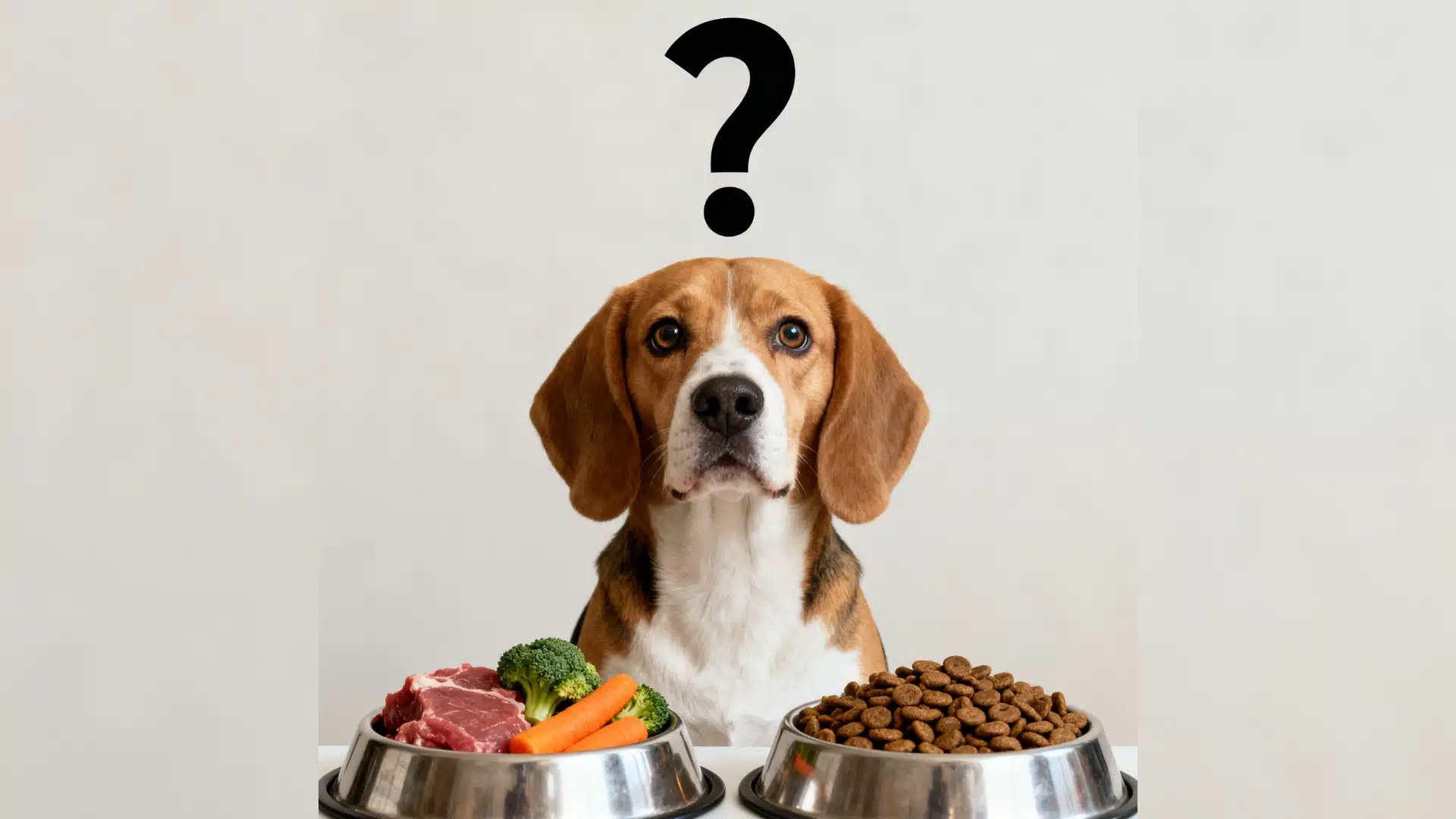
Kibble’s primary drawbacks include a low moisture content, wh1ich can lead to chronic dehydration and kidney-related issues, and high-heat processing, which destroys natural nutrients.
It often contains excessive starch, fillers (corn, soy, wheat), and artificial additives linked to obesity, diabetes, allergies, and cancer.
1. High-Starch Carbohydrate Content
Grains and other high-starch carbohydrates, such as high-glycemic corn, wheat, rice, or potato, make up the majority of kibble.
This creates metabolic stress, leading to spikes in insulin, glucagon, and cortisol throughout the day.
The high carb content also contributes to the growing epidemic of pet obesity.
2. Highly Processed
Kibble is made through a high-heat process, so many of the natural nutrients are lost during this process.
Manufacturers often add synthetic vitamins to compensate, but they are harmful to the health of your dog.
3. Low Moisture
Kibble is a low-moisture product, which puts a dog in a constant state of dehydration.
And this can lead to reduced energy levels in dogs, loss of appetite, panting, and loss of skin elasticity.
Over time, it may contribute to kidney or urinary issues.
4. Ingredient Quality
All kibbles are not of the same quality. Some kibbles are of feed-grade ingredients, fillers, artificial ingredients, or low-quality meat sources.
Labels can also be misleading, so the actual nutritional quality may be lower than it appears.
How to Make Kibble Better for Your Dog?
- Choose higher-quality brands with clear ingredient lists.
- Add raw or lightly cooked meats or eggs.
- Always provide fresh water.
- Mix kibble with home-cooked meals, such as vegetables and meat.
Are There Any Alternatives to Kibble?
Kibble is a fine choice for many dogs. But it is not the only one. Some dogs do well with fresh food.
Others need more water in their meals. And some owners just want to mix things up a little.
| Raw diet | Feeding your dog raw meat, bones, fruits, and vegetables. |
| Home-cooked food | It includes boiled chicken or eggs, rice, roti, and boiled veggies. |
| Wet dog food | This type of food comes in cans or pouches and has a high moisture content. |
| Mixed diet | This is the most recommended food by vets. Example: kibble + boiled chicken or kibble + veggies. |
| Commercial fresh food diets | These are ready-made, fresh meals designed for dogs |
Conclusion
Is kibble bad for dogs? There is no specific answer to this. Kibble should not be completely avoided, but it should not be given continuously either.
The key is to focus on quality and quantity.
The health of your dog depends on the overall diet, not just on one type of food.
If given in moderation and in a balanced amount, kibble can be part of a healthy routine.
Frequently Asked Questions
1. Do Vets Recommend Kibble?
Many vets recommend kibble for the dogs as the convenient option. However, they emphasize the importance of selecting a reputable brand and the balanced portion.
2. What is the Most Recommended Food for Dogs Home Cooked Meal or Kibble?
The most recommended of the two is home-cooked meals, which should include meats, eggs, fruits, and vegetables. For the perfect balance, add kibble to the home-cooked meals.
3. How to Know the Kibble You are Feeding to Your Dog is Safe for Them?
To ensure dog kibble is safe, check the brand name, analyze the quality of the ingredients it uses, and monitor your dog.


