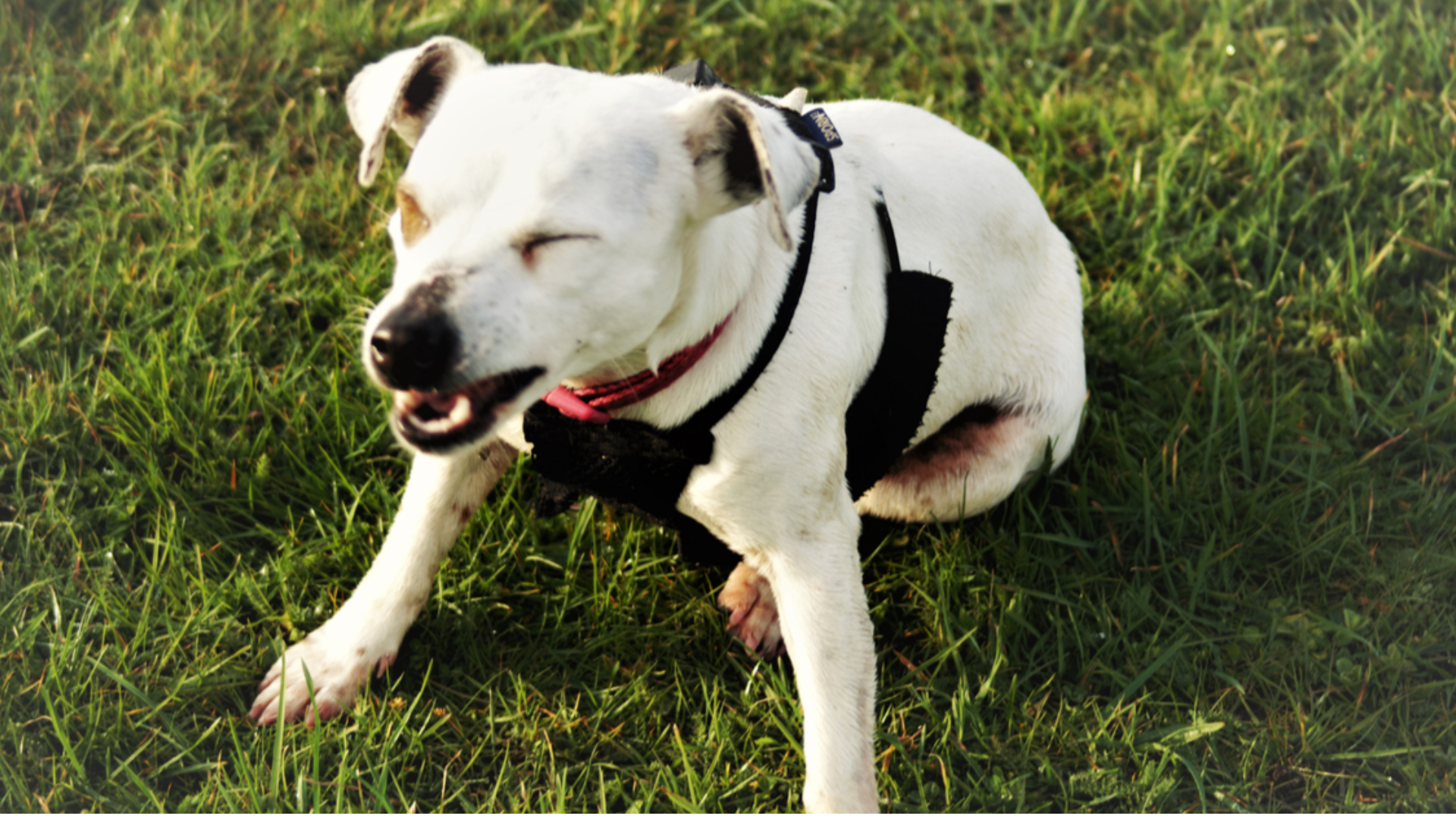
Your dog keeps licking their paw nonstop.
You spot a swollen red bump that wasn’t there before. Is it a spider bite? Spider bites can be hard to identify because they look similar to other skin issues like bee stings, allergic reactions, or hot spots.
But don’t worry, there are clear warning signs that help you tell the difference.
This blog shows you what to watch for and when you need to call your vet.
What a Spider Bite on a Dog Usually Looks Like
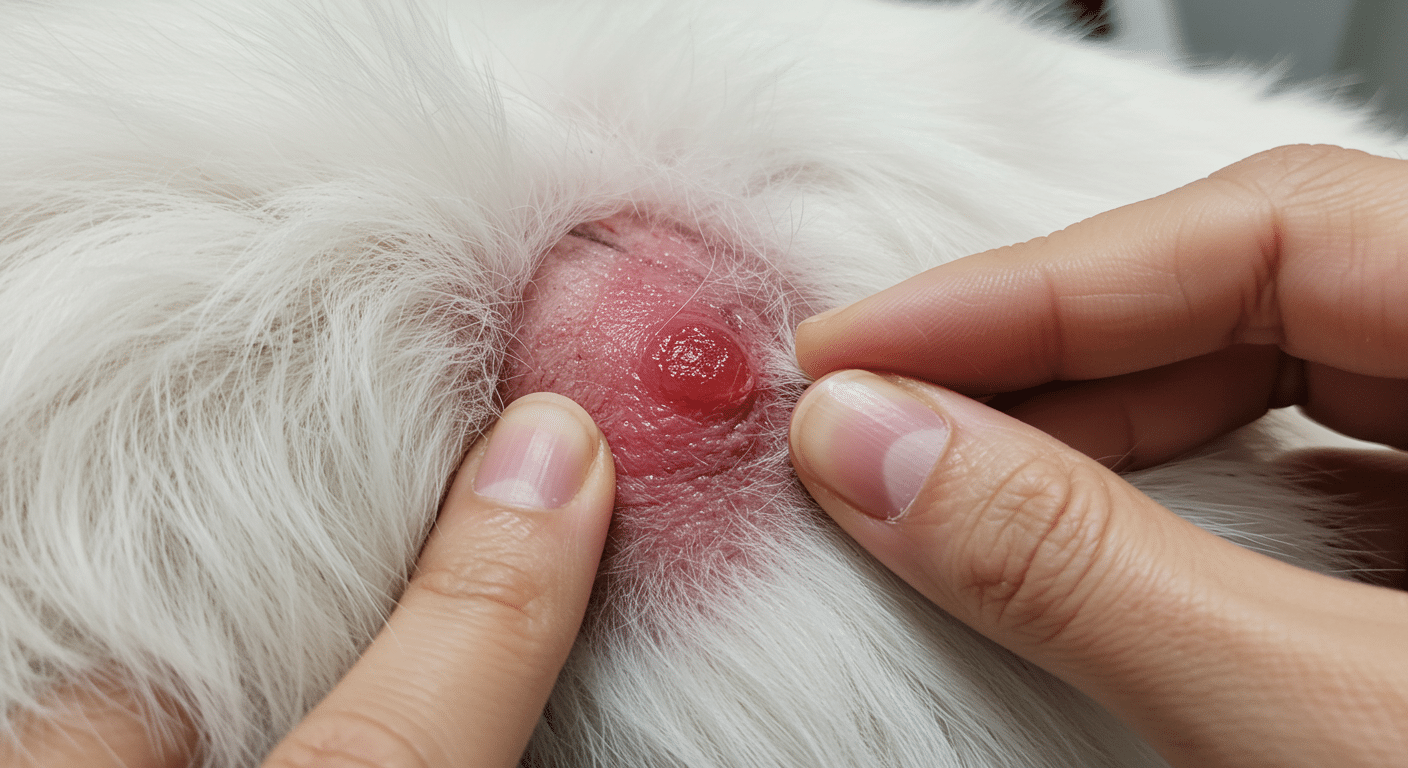
Spider bites on dogs typically appear as small, raised bumps on the skin. The bump is usually red or pink in color and feels warm when you touch it.
You’ll see a circular, raised area that’s about pea-sized or slightly larger. There’s often redness or pink discoloration around the bite, and swelling makes it feel firm to the touch.
A small puncture mark may be visible at the center, though it’s hard to see through your dog’s fur.
Sometimes, a bullseye pattern develops with a darker center and lighter outer ring.
It often looks similar to other insect bites at first, like a small welt under the skin. In some cases, you might notice hair loss or matting around the affected spot.
Signs and Symptoms
Your dog will show signs beyond just the visible bite mark. Pay attention to both physical symptoms and how your dog is acting.
Common symptoms include:
- Redness, swelling, and warmth around the bite
- Pain or tenderness when touched
- Excessive licking or scratching of the area
- Limping, restlessness, or lethargy
- Loss of appetite or fever
Most spider bites cause mild symptoms that improve within a day or two. Your dog might lick the area constantly or seem more tired than usual.
However, some bites trigger serious reactions that require immediate veterinary care. Don’t wait if you notice any severe symptoms. Get your dog to a vet right away.
Is the Bite Venomous or Non-Venomous? Know it Now
Not all spider bites are dangerous. Knowing the difference between venomous and non-venomous bites helps you decide how urgently your dog needs care.
Non-Venomous Spider Bites
Most spider bites are non-venomous and cause only minor issues.
Signs include:
- Mild, localized swelling and redness
- Minor itching or discomfort
- Symptoms improve within 24-48 hours
- Your dog acts mostly normally
The bite heals on its own without complications.
Venomous Spider Bites
These bites need veterinary attention.
Signs include:
- Rapidly spreading redness or swelling
- Intense pain
- Tissue turning black (necrosis)
- Vomiting, trembling, or weakness
- Symptoms that worsen over time
The key difference? Venomous bites get worse, while non-venomous bites improve after the first day. When in doubt, call your vet asap.
What if it is a Skin Issue?
Spider bites can look similar to other common skin problems. Here’s how to tell them apart.
Spider Bite vs. Flea or Tick Bite
- Flea bites appear as multiple small bumps in clusters, usually around the tail, belly, or groin. Tick bites often have the tick still attached or leave a red ring after removal.
- Spider bites are single, isolated bumps that are more swollen and raised.
Spider Bite vs. Allergic Reaction
- Allergic reactions cause multiple bumps (hives) scattered across your dog’s body. They’re extremely itchy and may cause facial swelling.
- Spider bites are one or two isolated spots with swelling concentrated in one area.
Spider Bite vs. Hot Spot
- Hot spots are large, moist, oozing patches that look wet and raw from constant licking.
- Spider bites start as dry, raised bumps.
Spider Bite vs. Abscess
- An abscess is a soft, pus-filled pocket that may rupture and release pus.
- Spider bites are firm initially and don’t contain pus unless infected later.
Spider bites typically show up suddenly as a single bump. If you’re seeing multiple spots or skin problems all over, you’re likely dealing with something else entirely.
Some Venomous Types of Spider
Knowing which spiders pose real danger helps you assess the risk to your dog.
Here are the main venomous spiders in the United States.
Black Widow Spider
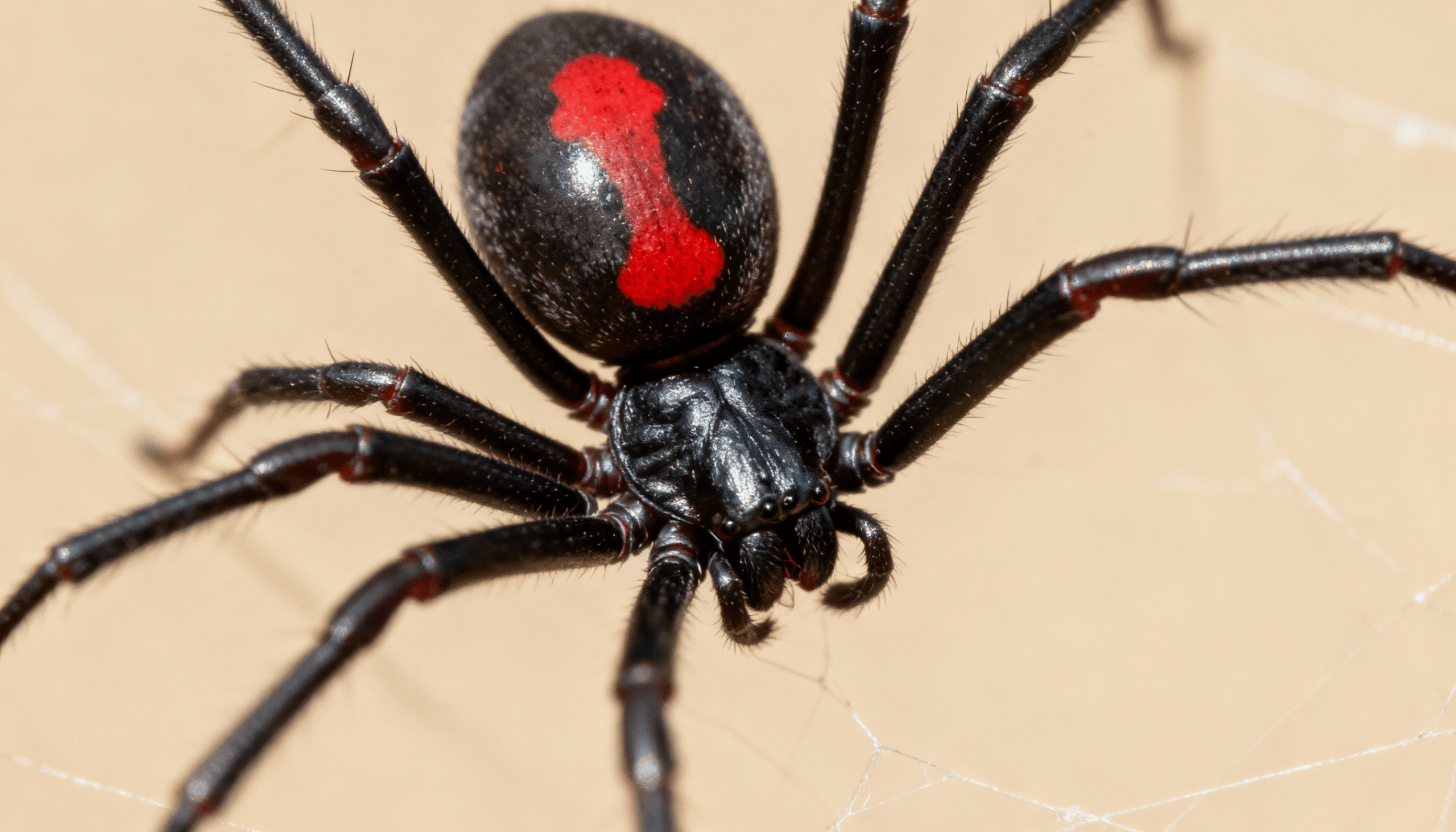
- Where they hide: Dark, sheltered areas like garages, sheds, woodpiles, and under rocks.
- Bite effects: Causes severe muscle pain, cramping, vomiting, difficulty breathing, and potentially paralysis. The most dangerous spider for dogs.
Brown Recluse Spider
- Where they hide: Dry, undisturbed areas like closets, attics, basements, and storage boxes.
- Bite effects: Creates necrotic wounds where tissue dies and turns black. May require surgical removal of dead tissue.
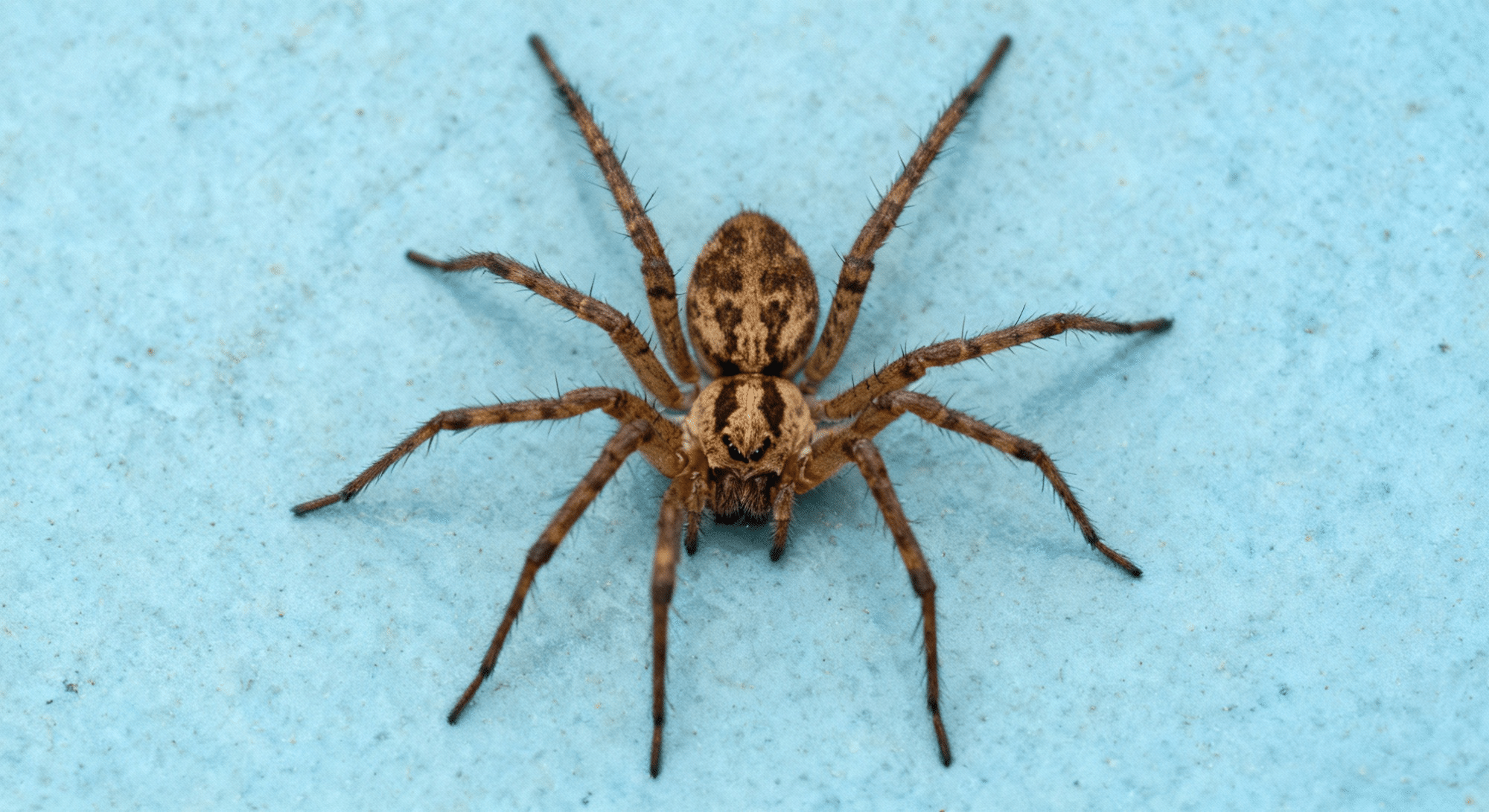
Wolf Spider
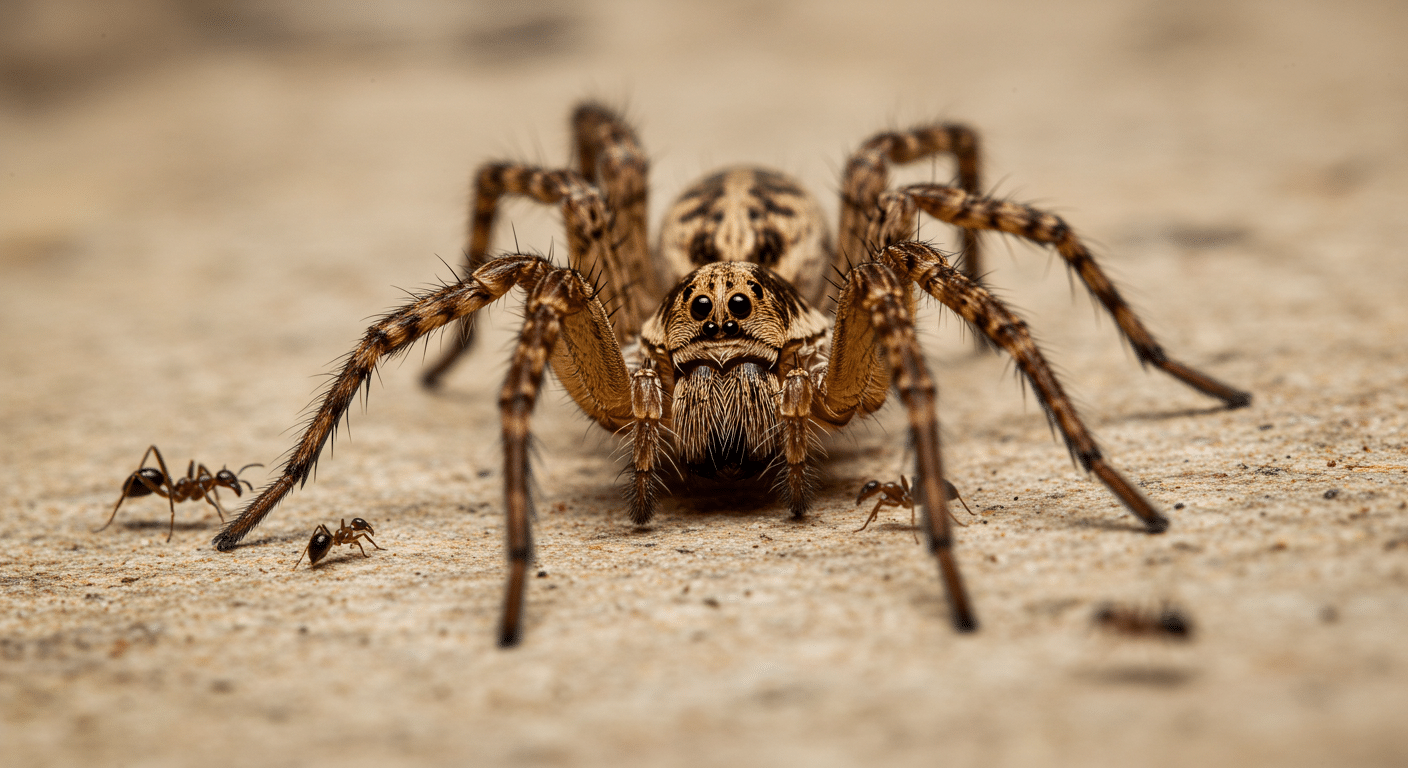
- Where they hide: Ground-dwelling in grass, gardens, and outdoor areas. Doesn’t build webs.
- Bite effects: Painful but generally not dangerous. Causes swelling and redness.
If you suspect a black widow or brown recluse bite, seek veterinary care immediately.
Treating Spider Bites
How you treat a spider bite depends on its severity. Here’s what to do at home and when to seek professional help.
If the bite seems mild and your dog is acting normal:
- Clean the area with warm water and mild soap
- Apply a cold compress for 10-15 minutes
- Prevent licking or scratching (use an Elizabethan collar if needed)
- Monitor for 24-48 hours
Don’t use hydrogen peroxide or alcohol, squeeze the bite, or give human medications without vet approval.
How to Prevent Your Dog from Spider Bites?
Here’s how to reduce the risk of spider bites for your dog.
Keep Your Home Spider-Free
Regular cleaning is your best defense against spiders.
Key steps:
- Vacuum corners and under furniture regularly
- Seal cracks in walls, windows, and doors
- Reduce clutter in basements and closets
- Keep grass trimmed and remove outdoor debris
Protect Your Dog Outdoors
Stick to well-maintained paths during walks and keep your dog on a leash in wooded areas. Check your dog after outdoor activities, especially near tall grass or woodpiles.
Avoid letting your dog investigate dark spaces where spiders hide.
Maintain Dog Areas
Clean your dog’s house and kennel regularly. Shake out bedding before use and seal any openings where spiders might enter.
Teach your dog the “leave it” command to keep them away from spiders. If venomous spiders are common in your area, consider hiring a professional pest control service.
When to Take Your Dog to the Vet
Take your dog to the vet if you notice:
- Signs of infection (pus, increasing redness, warmth)
- Swelling that spreads after 24 hours
- Fever or the bite area turning dark or black
- Systemic symptoms (vomiting, lethargy, trembling, difficulty breathing)
- Suspected black widow or brown recluse bite
Your vet may prescribe antibiotics, pain medications, or anti-inflammatory drugs.
Severe cases may require antivenin, IV fluids, or surgical removal of dead tissue. Most dogs recover fully with proper treatment.
Conclusion
Spider bites on dogs can range from minor irritations to serious emergencies.
The key is knowing what you’re looking at and acting fast when needed.
Most bites heal with simple first aid and basic dog spider bite treatment.
But don’t ignore warning signs like spreading redness, tissue damage, or behavioral changes. When in doubt, always call your vet; it’s better to be safe than sorry.