Puppies chew everything. Your shoes, furniture, even your fingers.
Teething is totally normal for pups, and it is easy to manage puppies during that time.
This blog covers exactly when it starts, what signs to watch for, and how to handle it without losing your mind.
By the end, you’ll know just what to do when those tiny teeth start causing trouble.
When Do Puppies Start Teething?
Most new puppy owners are caught off guard the first time their pup starts gnawing on everything in sight.
It feels sudden, but teething is something every puppy goes through.
It actually begins around 3-4 weeks of age, with some starting as early as 2-3 weeks, depending on breed. That’s right before most puppies even leave their mother.
Once you understand the timeline, you can stay one step ahead of it.
A Quick Look at The Puppy Teething Timeline
Knowing the teething timeline helps you prepare early. Here’s a simple breakdown of each stage, so you know exactly what’s coming.
Birth to 2 Weeks: Toothless Stage
Newborn puppies are born without any teeth. They rely completely on their mother’s milk for nutrition.
- No teeth present at birth
- Gums are soft and sensitive
- Nursing is their only food source
Weeks 2 to 4: First Baby Teeth Appear
This is when things start moving. Tiny baby teeth, called deciduous teeth, begin pushing through the gums.
- Front teeth (incisors) appear first
- Gums may look slightly swollen
- Chewing instincts begin showing up
Weeks 5 to 8: Full Set of Puppy Teeth
By week eight, most puppies have a full set of 28 baby teeth. This is also around the time they move to solid food.
- All 28 baby teeth are present
- Chewing becomes more frequent
- Solid food introduction begins
Weeks 12 to 16: Puppy Teeth Falling Out
This stage catches many owners off guard. Baby teeth loosen and fall out as adult teeth push through underneath.
- Incisors are usually the first to go
- You may find tiny teeth around the house
- Chewing urges increase significantly
6 Months and Older: Adult Teeth Fully Formed
By six months of age, most dogs have all 42 adult teeth in place. The teething process is nearly complete at this point.
- Full set of 42 permanent teeth
- Chewing should settle down gradually
- Vet check recommended to confirm proper alignment
At a Glance: Quick Teething Timeline
| Age | Stage | What to Expect |
|---|---|---|
| Birth to 2 weeks | Toothless | No teeth, gums only |
| Weeks 2 to 4 | Baby teeth appear | Incisors push through |
| Weeks 5 to 8 | Full baby set | 28 teeth, solid food begins |
| Weeks 12 to 16 | Teeth falling out | Baby teeth loosen and drop |
| 6 months + | Adult teeth | 42 permanent teeth in place |
Signs Your Puppy is Teething

Your puppy can’t tell you their gums hurt. But their behavior will. Here’s what to watch for:
Excessive chewing: Your puppy chews anything they can get their paws on. Shoes, furniture, and cables are common targets.
Drooling more than usual: A little extra drool is normal during teething. It’s the gums’ way of responding to the pressure.
Swollen or red gums: Gently check your puppy’s mouth. Puffy, pink gums are a clear sign that teeth are pushing through.
Whining or irritability: Teething puts pressure on sensitive gums. Some puppies become restless or less playful than usual during this stage.
Loss of appetite: Sore gums can make eating uncomfortable, so don’t panic if your puppy eats a little less.
Types of Teeth and Their Purpose
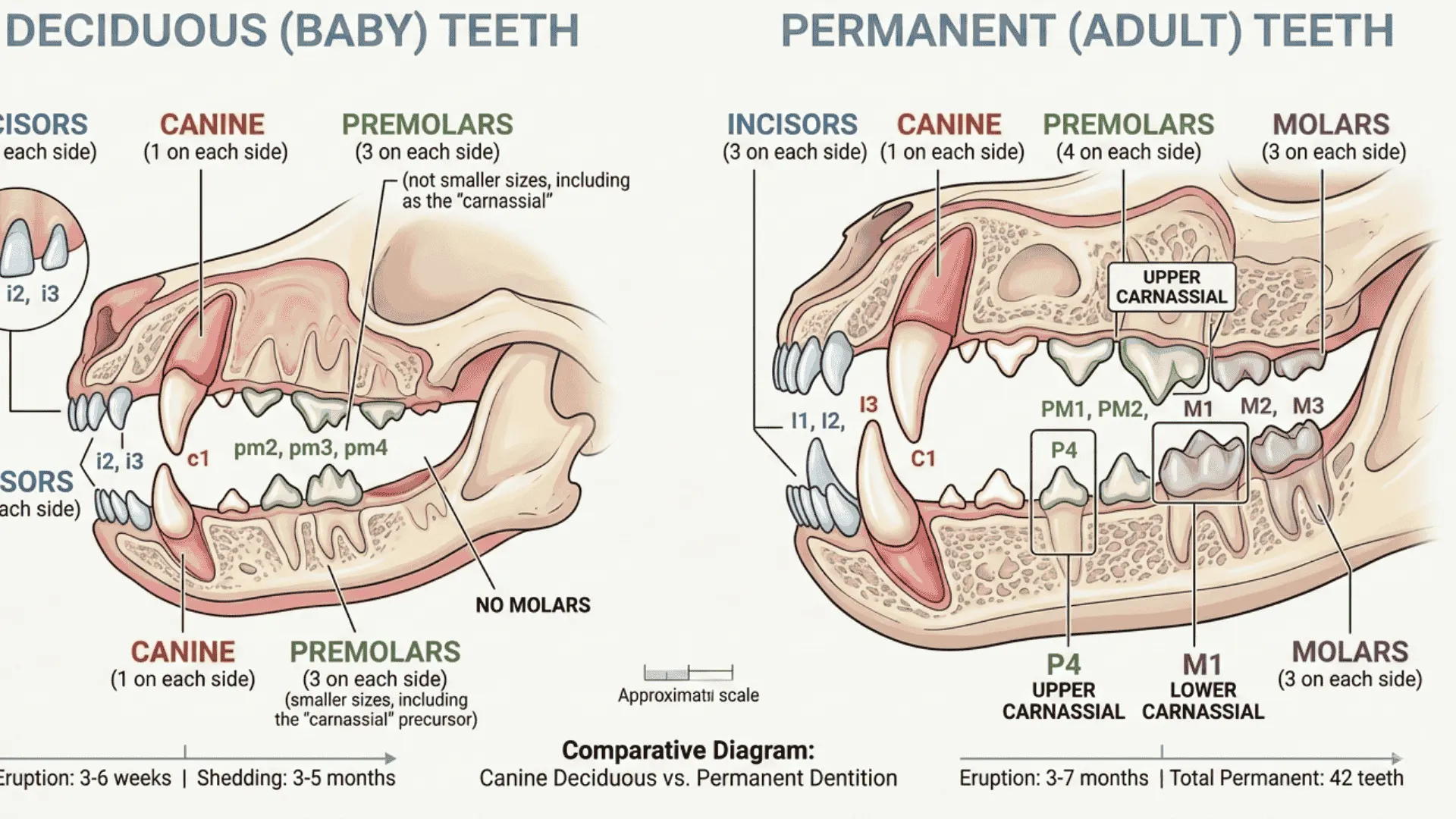
Here’s a quick breakdown of the different types, how many there are, and what they’re actually used for.
| Type of Tooth | Number (Baby) | Number (Adult) | Purpose |
|---|---|---|---|
| Incisors | 12 | 12 | Nibbling, grooming, picking up small items |
| Canines | 4 | 4 | Gripping and tearing food |
| Premolars | 12 | 16 | Chewing and shredding food |
| Molars | 0 | 10 | Grinding hard food |
Puppies start with 28 baby teeth in total. By the time puppies reach the final stage of teething, they have a full set of 42 permanent adult teeth.
How To Care for a Teething Puppy?
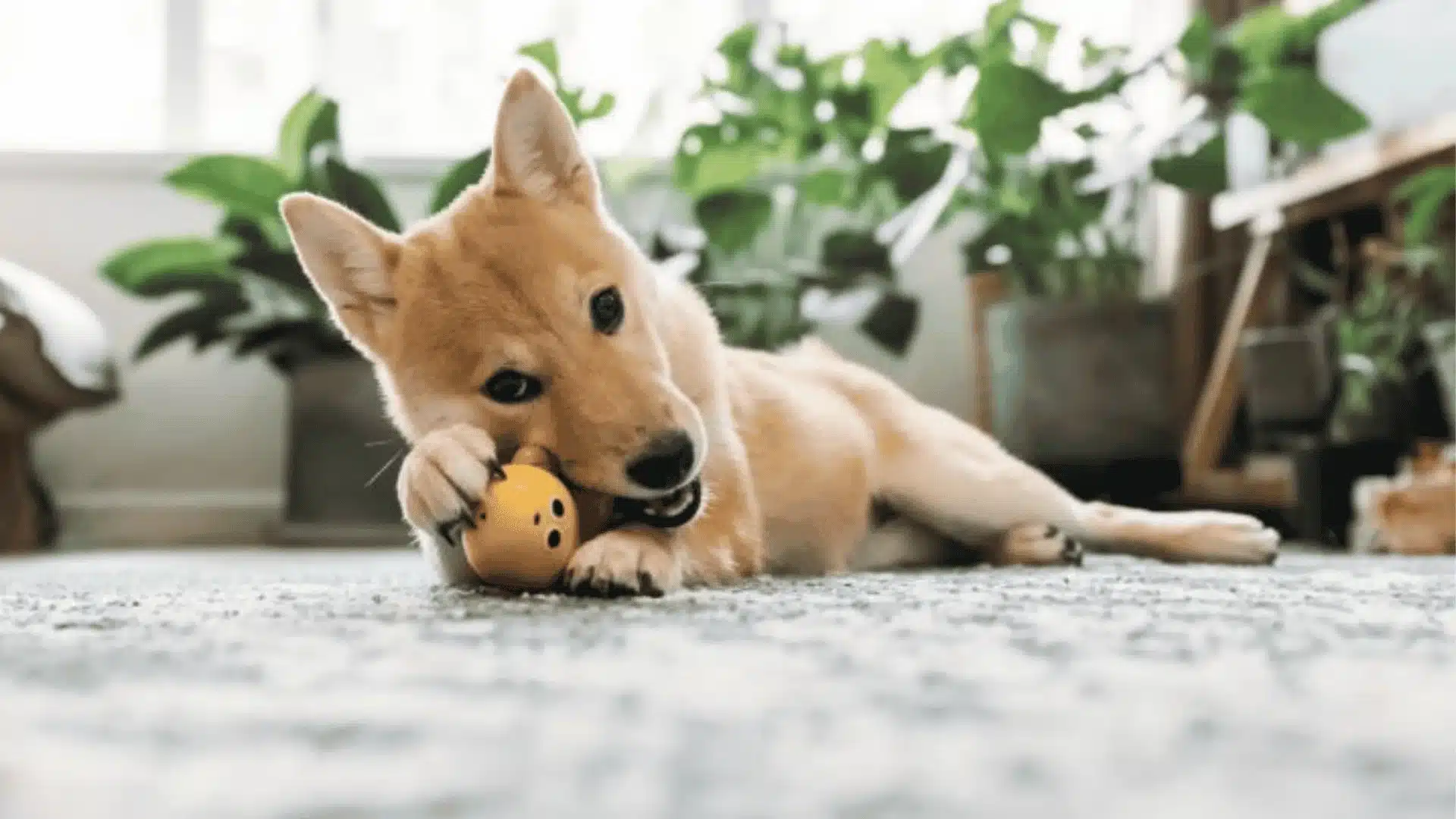
The chewing and discomfort that follow can be tough on both the puppy and you. The right care makes a real difference.
Here are three simple ways to help your puppy through this stage comfortably.
1. Safe Chew Toys for Teething Puppies
Chew toys are your puppy’s best friend during this stage.
Look for toys made from rubber or nylon; they’re firm enough to satisfy chewing urges but soft enough not to damage growing teeth.
Avoid anything too hard, like real bones or hard plastic.
If you press your thumbnail into it and it doesn’t leave a mark, it’s too hard for your puppy.
2. Edible Teething Sticks for Puppies
Edible teething sticks are a popular option for good reason. Here’s what to look for:
- Choose sticks made with natural ingredients
- Avoid anything with artificial preservatives or added sugar
- Pick an appropriate size for your puppy’s breed
- Always supervise your puppy while they chew
- Replace the stick once it gets small enough to swallow whole
3. Healthy Frozen Foods For Puppies to Chew
Frozen foods work surprisingly well for soothing sore gums.
A frozen carrot or a small frozen piece of apple gives your puppy something safe to gnaw on. The cold temperature helps reduce gum swelling and eases the discomfort.
Just make sure whatever you freeze is puppy-safe and cut into an appropriate size.
Preventing Destructive Chewing During Teething
Teething puppies chew out of instinct, not mischief. A few simple steps can protect your belongings:
- Keep shoes, cables, and valuables out of your puppy’s reach
- Redirect chewing to appropriate toys immediately when you catch them chewing on something wrong
- Use a bitter spray on furniture legs to discourage chewing
- Supervise your puppy closely during the peak teething months
- Reward your puppy with praise when they chew the right things
When Do Puppies Stop Teething?
Most puppies stop teething by the time they reach six months of age.
By then, all 42 adult teeth should be fully in place. The chewing urges gradually settle down once the new teeth are through.
That said, every puppy is different. Some may take a little longer. Vets often remind owners that “even after teething ends, puppies still need safe outlets for chewing, it’s just part of how they’re wired.”
So keep those chew toys handy.
Final Thoughts on Puppy Teething
Teething is something every puppy goes through, and now you know what to expect.
From those first tiny baby teeth at two to three weeks, all the way through to a full set of adult teeth at six months, it’s a process that moves quickly.
Keep an eye on your puppy’s gums, redirect the chewing, and don’t stress the small stuff.
Have you noticed any teething signs in your puppy already?
Drop your experience in the comments below. Other puppy owners would love to hear what worked for you.
Frequently Asked Questions (FAQs)
1. Do Puppies Bite You When Teething?
Yes, puppies often nip and bite during teething. It relieves gum discomfort. Redirect them to a chew toy instead.
2. Do Puppies Cry Because of Teething?
They can. Sore, swollen gums cause real discomfort. Some puppies whine or seem restless during the peak teething stages.
3. Are Puppies Clingy When Teething?
Yes, some puppies seek extra comfort when teething. They may follow you around more than usual during this period.
4. Can I Give my Puppy a Carrot For Teething?
Absolutely, frozen carrots are a safe, healthy option. They soothe sore gums and keep your puppy happily occupied.