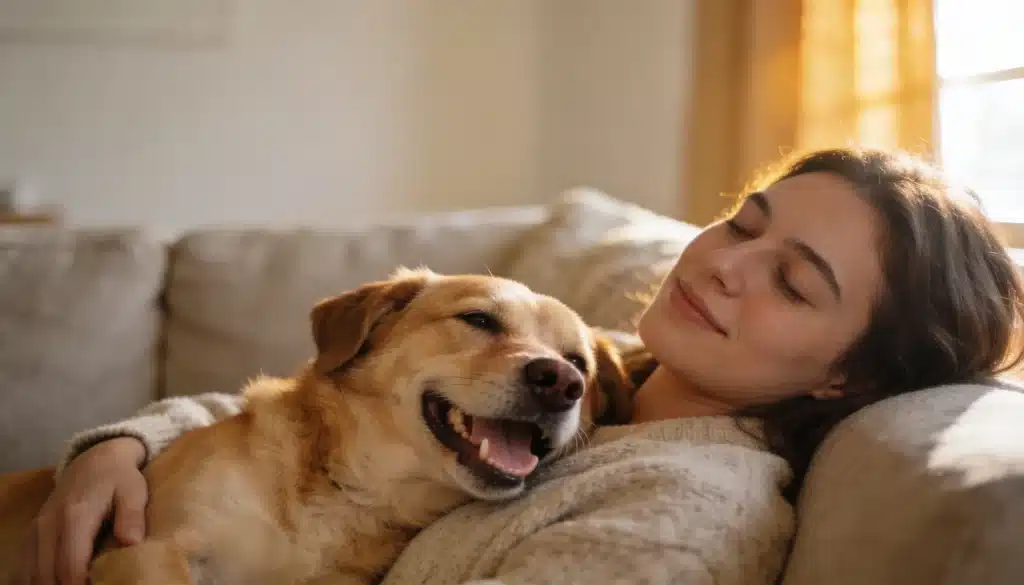
Your dog has had a full day. Walks, food, playtime. And yet, the moment you sit down, they are right there, pressed against you like they have nowhere else to be.
Dogs are pack animals, and staying close to the ones they love gives them a sense of safety and warmth.
But there is more to it than just instinct.
Cuddling is also how dogs show affection, bond, communicate trust, and find comfort when the world feels uncertain.
It is emotional and instinctual, all at once.
Why Do Dogs Like to Cuddle?
Dogs cuddle because it meets something real in them.
Safety, warmth, connection, comfort. These are not random behaviors. They go back to instincts shaped over thousands of years. Staying close once meant surviving. That wiring is still active today.
When your dog curls up next to you, their nervous system registers it as a sign of safety.
As exactly where they are supposed to be.
But instinct is only part of it. Dogs read our faces and respond to how we make them feel. When they choose to be near you, they are not just looking for warmth. They are choosing you.
Dogs like to cuddle because it provides safety, warmth, emotional bonding, and stress relief rooted in their pack instincts.
The Instinctive Origins of Cuddling
Cuddling did not start as a cute habit. And to understand, you have to go back to where it all began.
It started with survival and a need for protection.
1. Pack Behavior and Group Living
Wild dogs lived and rested together. Physical closeness kept them warm, reduced stress, and signaled safety within the group.
That mentality is still in your dog today. Your home is their pack. Staying close to you is not neediness. It is just natural.
2. Early Puppy Dependence on Littermates
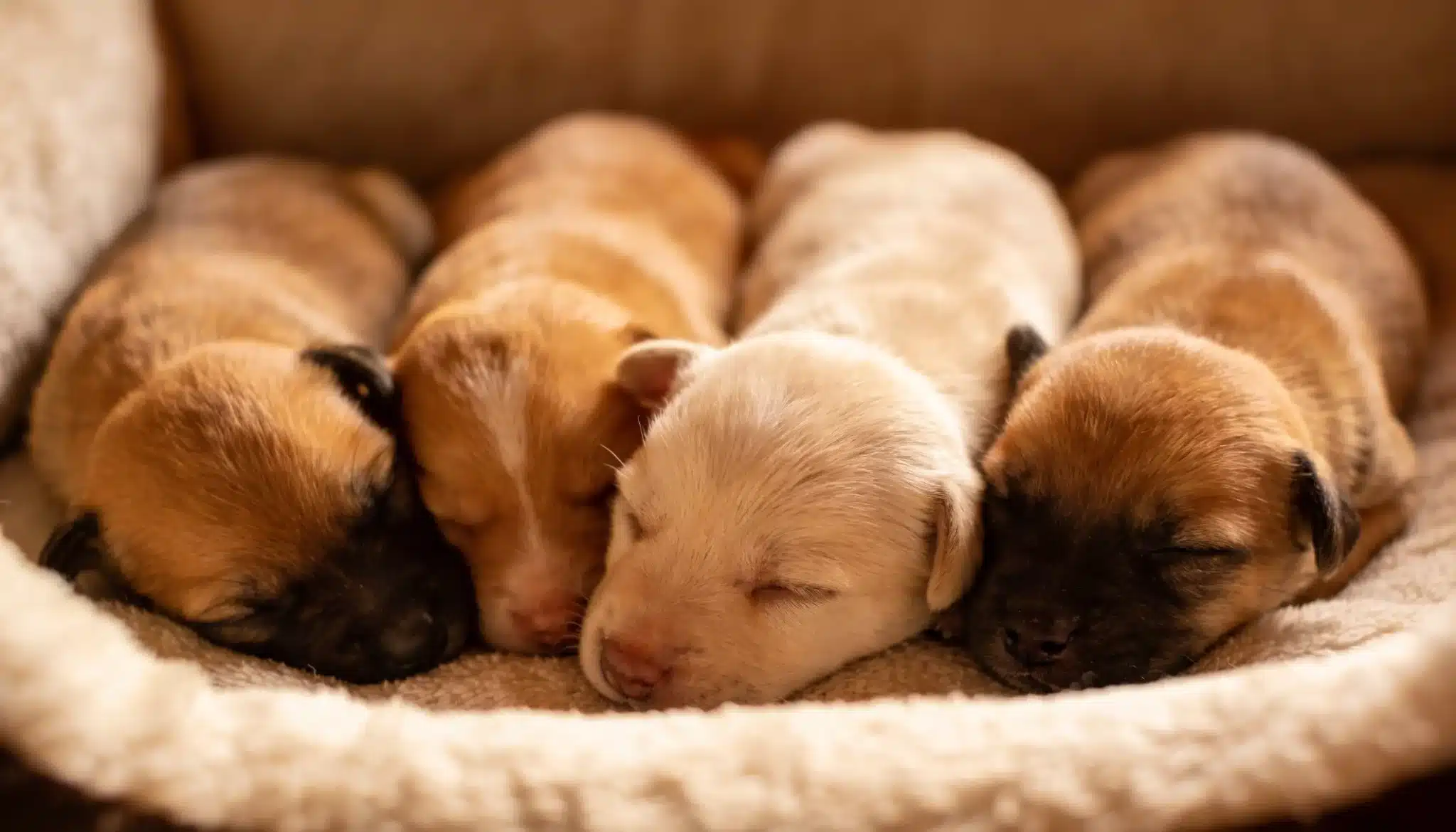
Puppies are born into warmth and contact. In those first weeks, being surrounded by siblings regulates their temperature and soothes them.
That need for closeness does not just switch off.
When your grown dog leans into you on the couch, some part of that goes all the way back to those very first days.
3. Evolution from Wild to Domestic Life
Over thousands of years, dogs moved from pack life to family life. The instinct to stay close did not disappear with that shift.
It simply transferred. From the pack to the people. And that is exactly where it lives today.
The Emotional Side of Dog Cuddling
Instinct explains part of it. But dogs also cuddle because they genuinely feel things. Attachment, comfort, and a quiet awareness of the people around them.
1. Attachment and Trust Building
Dogs form real attachments to specific people.
And physical closeness is one of the main ways they build on that. Each time your dog chooses to be near you, trust grows a little more.
Cuddling is not just comfort seeking. It is relationship building.
2. Stress Relief and Anxiety Reduction
Dogs experience stress, too.
Loud noises, unfamiliar places, changes in routine. When that happens, most dogs move toward their person.
Physical contact slows their heart rate and brings them back down. You are their safe place, and cuddling is how they access it.
3. Sensitivity to Owner’s Mood
Dogs notice more than we give them credit for. A quieter voice, a change in posture, a heavy day. They pick up on all of it.
Many owners notice their dog coming closer when things feel hard, resting its head on a knee without being asked.
That is not a coincidence!
The Science Behind Cuddling Behavior
There is a real biological basis for why dogs seek closeness. The body is actively involved, and the science backs it up.
Oxytocin and Bonding Hormones
Physical contact with a trusted human triggers oxytocin release in both dogs and their owners, lowering stress and reinforcing the desire to stay close over time.
Physical Touch and Nervous System Responses
Gentle touch slows heart rate and eases muscle tension. For anxious dogs, contact with a trusted person can quickly calm them.
Why Closeness Feels Rewarding
The dog’s brain registers physical closeness in much the same way it processes food or play.
Each cuddle delivers comfort, and over time, that loop becomes one of their most natural responses.
Common Cuddling Behaviors Dogs Show
Dogs show affection in specific, recognizable ways. Once you know what to look for, it becomes easy to read your dog’s signals.
| Behavior | What It Looks Like | What It Means |
|---|---|---|
| Leaning or Pressing Against You | Your dog pushes their body weight into your legs or feet | They want to feel your presence. A quiet but clear signal of trust and comfort. |
| Sleeping Close or On You | Your dog sleeps touching your body, on your feet, or across your lap | Sleep is when dogs are most vulnerable. Choosing to stay close means they feel completely safe with you. |
| Nudging for Physical Contact | Your dog pushes their nose or head into your hand when you stop petting | Their way of asking for more. It means they are not done, and they actively enjoy the contact. |
Why Some Dogs Cuddle More Than Others?
Not every dog is a natural cuddler, and that is completely normal. Breed, background, and life experience all shape how much closeness a dog seeks out.
Some breeds, like Cavalier King Charles Spaniels and Golden Retrievers, were built for human companionship, while others, like Huskies or Shiba Inus, show affection on their own terms.
Upbringing matters just as much.
A dog raised with consistent warmth is far more likely to seek closeness, while one with limited socialization may simply need more time. Age plays a role, too.
Puppies crave security, senior dogs seek more comfort, and even the most active dog will find their way to you on a quiet evening.
Signs Your Dog Does Not Want to Cuddle
Dogs communicate constantly, just not always in ways we notice right away.
Learning to read the quieter signals can make a real difference in how your dog feels around you.
If you push for closeness when they are not feeling it, you chip away at the trust you have built. But if you respect their signals, that trust grows stronger.
- Turning Away or Moving Spots: If your dog gets up and relocates when you sit close, they are telling you they need space right now.
- Body Stiffening: A tense body during physical contact is a clear sign of discomfort, not contentment.
- Flattened Ears or Tucked Tail: Both are signs your dog feels uneasy and would rather not be touched at that moment.
- Repeated Yawning or Lip Licking: These are subtle stress signals that are easy to miss but worth paying attention to.
How to Encourage Comfortable Cuddling
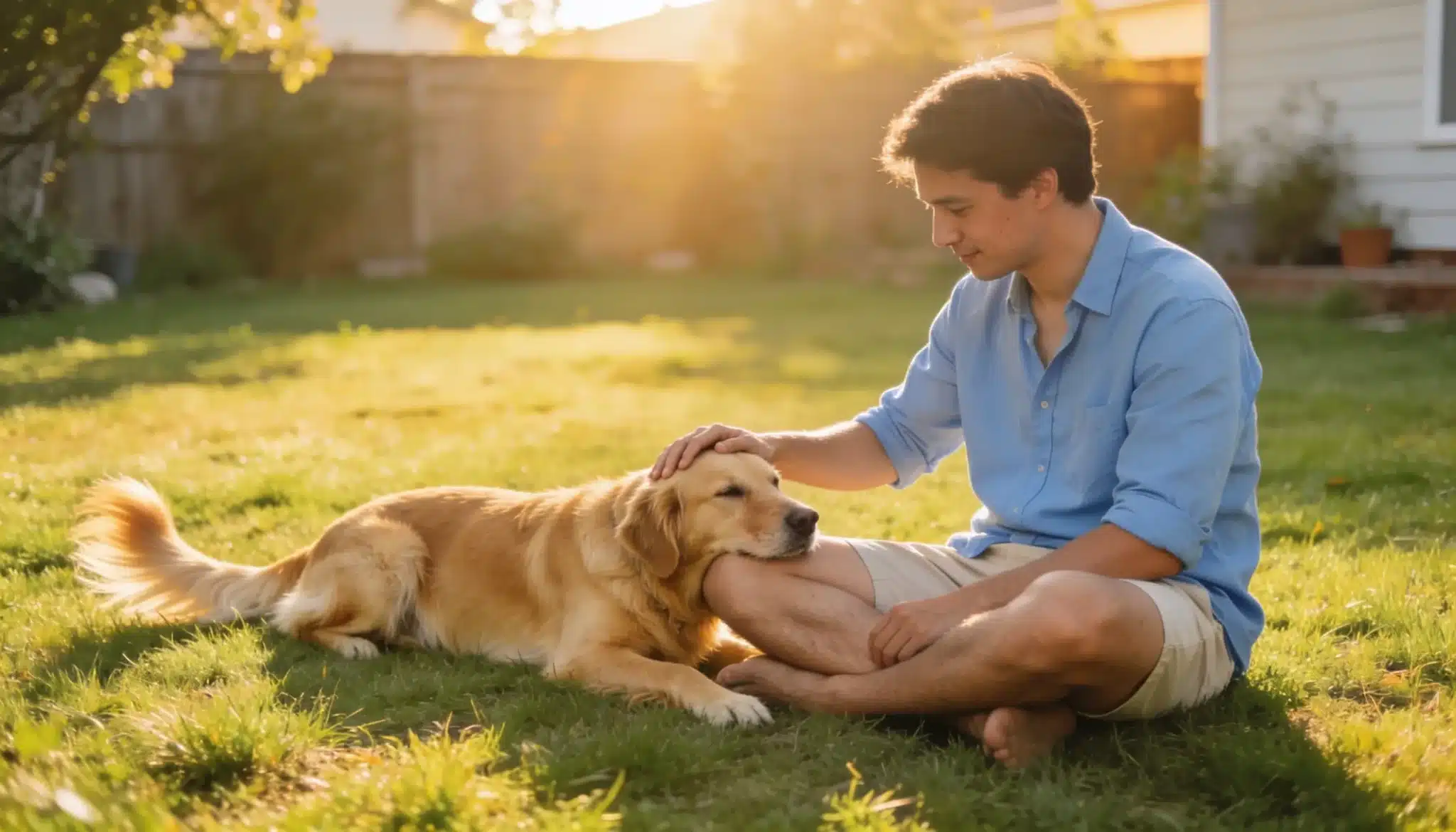
Not every dog warms up to closeness right away, and that is okay. The key is to let it happen on their terms. Watch your dog and learn their signals.
If they lean in, that is a green light. If they turn away or stiffen, give them some space.
Forcing closeness does the opposite of what you want. A dog that feels secure in their environment is far more likely to seek out affection on their own.
Keep things calm and predictable around them. And when it comes to building trust, do not rush it. Sit near them without pressure, let them come to you, and respond with calm and gentleness when they do.
Trust builds slowly, and the cuddling that follows builds right along with it.
Conclusion
So why do dogs like to cuddle? It is never just one thing.
It is pack instinct carried forward through thousands of years, emotional bonds built through daily trust, and the comfort your dog has learned to associate with your presence.
Every dog expresses this differently. Some will be on your lap the moment you sit down.
Others show closeness in quieter, less obvious ways. Neither is wrong.
Once you understand why dogs like to cuddle, every quiet moment of closeness starts to mean a little more.
Frequently Asked Questions (FAQ’s)
1. Why do Dogs Like to Cuddle With Humans?
Dogs cuddle with humans out of instinct, trust, and emotional attachment built over thousands of years of companionship.
2. Is it Normal for My Dog to Cuddle With Me Every Day?
Yes, daily cuddling is completely normal and usually a sign that your dog feels safe and deeply bonded with you.
3. Why Does My Dog Cuddle With Me and Not Others?
Your dog cuddles with you because you are the person they trust most and feel the safest around.
4. Can Cuddling Help an Anxious Dog?
Yes, physical contact from a trusted person can lower stress and help calm an anxious dog.
5. Why Does My Dog Suddenly Not Want to Cuddle?
A sudden change in cuddling behavior can point to physical discomfort, stress, or an underlying health issue worth checking out.