Seeing your pet dog suffer is always hard to watch. To see them go from being the life of the house to sitting in a corner in pain – that sucks, doesn’t it?
An ear infection is as bad as they come.
It starts slowly, but if left untreated, it can cause a lot of pain to your beloved pet. Panicking in this situation and rushing to the vet is an understandable instinct.
But wait before you do that.
Mild infections can often be managed at home with effective home remedies for dog ear infection.
What is an Ear Infection and What Causes It?
Before you understand how to treat a dog’s ear infection without a vet, it’s important to get a little clarity on what it actually is.
A dog ear infection, medically known as otitis externa, is an inflammation of the ear canal.
It’s one of the most common health problems in dogs, and certain breeds are more prone to it than others.
And many external factors can trigger the infection.
But the most common causes include yeast or bacterial overgrowth, trapped moisture (especially in dogs that swim often), ear mites, and food or environmental allergies.
Dogs with long, floppy ears are particularly vulnerable.
Because airflow in their ear canals is limited, it creates a warm, moist environment that is suitable for bacteria and yeast.
Some breeds are more prone to ear infections than others. Cocker Spaniels, Basset Hounds, Labrador Retrievers, Golden Retrievers, and Poodles top the list, thanks to their ear shape, coat type, or love of water.
Signs Your Dog May Have an Ear Infection

Dogs can’t tell you when something’s wrong. Paying them a little attention will show you.
The signs of an ear infection are subtle at first, but once it grows, you can’t miss it. So, knowing the signs can help you address the problem before it’s too late.
- Head Shaking: Your dog keeps shaking their head repeatedly to relieve the irritation.
- Scratching Ears: They’re constantly pawing at one or both ears, more than is normal.
- Odor: A yeasty, musty, or foul smell coming from the ear is one of the biggest giveaways.
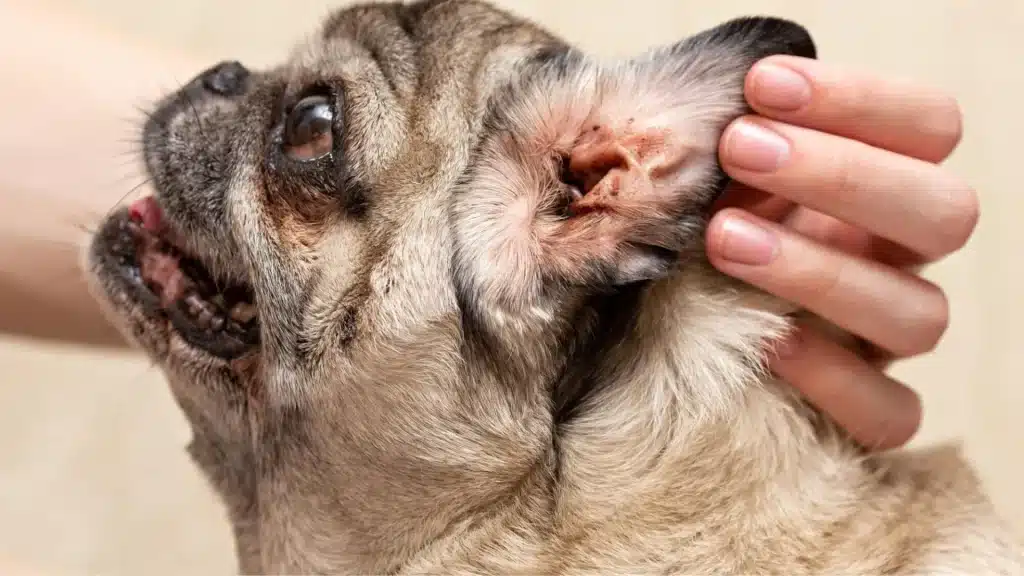
- Redness: The inside of the ear flap appears inflamed or feels warmer than usual.
- Discharge: You notice brown, black, or yellowish gunk building up inside the ear canal.
- Sensitivity to Touch: Your dog flinches, pulls away, or whines when you gently touch or pet near their ears.
Types of Dog Ear Infections
Not all dog ear infections are classified by how deep inside the ear the infection occurs, and the deeper it goes, the more serious it becomes.
- Outer Ear (Otitis Externa) – Head shaking, odor, discharge
- Middle Ear (Otitis Media) – Head tilting, balance issues, facial drooping
- Inner Ear (Otitis Interna) – Loss of balance, hearing loss, walking in circles
Home Remedies for Dog Ear Infection
Before you try any of the home remedies, always clean your dog’s ear first, and stop immediately if your dog shows signs of increased pain or irritation.
If the ear is bleeding, has foul-smelling discharge, or your dog is tilting their head, see a vet.
1. Warm Compress
A warm compress is one of the safest home remedies for a dog’s ear infection.
Soak a clean cloth in warm water, wring it out, and hold it gently against the outside of your dog’s ear for 2–3 minutes.
Repeat twice daily, and make sure the cloth is not too hot to avoid irritating sensitive skin.
Never use a heating pad or hot water bottle as a substitute. The heat is too intense and can seriously damage your dog’s ear tissue.
2. Apple Cider Vinegar
Diluted apple cider vinegar is commonly used for gentle, superficial ear cleaning.
Mix equal parts of raw apple cider vinegar and distilled water. Apply a few drops onto a cotton ball and wipe only the visible outer ear; never pour it into the ear canal.
Precaution: Never use undiluted apple cider vinegar, it will burn inflamed tissue. More importantly, do not use this remedy if you suspect a ruptured eardrum. Signs include blood, sudden intense pain, or strongly foul-smelling drainage. When in doubt, consult your vet first.
3. Coconut Oil
Coconut oil has some antifungal and antibacterial properties, though evidence is mostly anecdotal.
Warm a small amount until liquid, then apply gently with a cotton ball.
Never use flavored or processed coconut oil as a substitute. Only cold-pressed, virgin coconut oil should be used topically.
Precaution: Do not drop coconut oil into the ear canal without your vet’s approval. Oil inside the canal can trap debris, make examination harder, and potentially worsen the infection or interfere with prescribed medications.
4. Witch Hazel
Witch hazel is an astringent that can help remove surface debris from the outer ear flap.
Apply a small amount to a cotton ball and gently wipe only the visible areas of the outer ear. Use sparingly and only once daily.
Witch hazel is not a standard vet-recommended ear treatment. It can sting and further irritate inflamed or raw tissue. Avoid entirely if the ear canal looks raw, and broken.
5. Aloe Vera Gel
Pure aloe vera gel can soothe surface redness and reduce mild irritation on the visible skin of the ear flap.
Apply a thin layer with a cotton ball only to the outer, inflamed skin.
Use 100% pure aloe vera with no added alcohol, fragrance, or coloring. Avoid using commercial aloe vera as they contain synthetic additives.
6. Green Tea Rinse
Cooled green tea has mild antioxidant properties and is sometimes suggested as a gentle rinse for superficial ear irritation.
Brew a plain, unflavored green tea bag, and let it cool completely to room temperature.
Then use a dropper to apply a very small amount, and wipe the outer ear with a cotton ball afterward.
Important Safety Note: Never put any liquid into your dog's ear canal if you suspect a ruptured eardrum. Doing so can cause serious, permanent damage. Also, avoid cotton swabs, tea tree oil, essential oils, and undiluted antiseptics, as these are either toxic or highly irritating to dogs. Home remedies can only support very mild, early-stage irritation. Moderate or severe infections need veterinary diagnosis and prescription treatment.
How to Clean Your Dog’s Ear Safely at Home?
Knowing how to clean your dog’s ear is as important as knowing home remedies for dog ear infections.
Start by gathering a vet-approved ear-cleaning solution, cotton balls, and treats to help keep your dog calm.
Gently lift the ear flap and apply a few drops of solution into the outer canal.
Massage the base of the ear for 20–30 seconds. Let your dog shake their head, then wipe away loosened debris with a cotton ball, only as far as your finger can reach.
And remember, never use cotton swabs inside the canal.
They push debris deeper and can cause injury. Avoid over-cleaning, as it strips the ear’s natural protective oils and can trigger further irritation.
Stop Your Home Remedies if Your Dog is Experiencing This
It’s always better not to panic when you see an infection; analyze it first to see if it can be treated at home.
But if you see these signs in your dog’s ear, panic and consult a vet immediately.
1. Blood or Pus: Any bloody or thick, pus-like discharge, green or yellow, is a sign of a serious infection that needs prescription medication.
2. Severe Swelling: If the ear canal looks visibly swollen or feels hard to the touch, the infection has likely spread deeper.
3. Fever: A warm nose, lethargy, and loss of appetite alongside ear symptoms can indicate the infection is affecting your dog’s overall health.
4. Balance Issues: Tilting head, walking in circles, or stumbling are signs the infection may have reached the middle or inner ear, which is a medical emergency.
5. No Improvement After 2-3 Days: If home remedies for dog ear infection show no results within a few days, the infection is likely beyond what home care can handle.
6. Chronic Infections: If your dog gets ear infections repeatedly, an underlying cause, like allergies or a hormonal issue, is suspected, which needs professional diagnosis and treatment.
How to Prevent Future Ear Infections?
After every bath or swimming session, gently dry your dog’s ears using a soft towel or cotton ball, as trapped moisture is one of the leading triggers for infection.
Make weekly ear checks part of your routine.
Keep up regular grooming, especially for breeds with hair in the ear canal, as overgrowth can trap debris and moisture.
If your dog suffers from recurring infections, allergy management is key.
Finally, feeding a high-quality, balanced diet supports a stronger immune system, making your dog more resistant to infections.
Look for dog foods with limited ingredients and no common allergens like chicken, wheat, corn, or soy, these are frequent triggers for ear inflammation.
Final Thoughts
Dealing with a dog ear infection can feel overwhelming, but it doesn’t always require an immediate trip to the vet.
And now you’re fully aware of when to treat at home and when to rush to the vet.
The home remedies for dog ear infection are safe starting points, but always pay attention to how your dog responds.
If things aren’t improving within a few days, don’t wait, and see a vet immediately.
Frequently Asked Questions (FAQs)
1. Do Dogs Feel Pain from an Ear Infection?
Yes. Ear infections are painful for dogs. You may notice them whining, flinching when touched near the ear, or refusing to eat.
2. Do Dogs Sleep More with Ear Infections?
They can. Pain and discomfort from an ear infection can make dogs lethargic and less active than usual.
3. What Happens if a Dog Has an Ear Infection for Too Long?
Untreated infections can spread deeper, cause permanent hearing loss, rupture the eardrum, or lead to serious neurological issues.