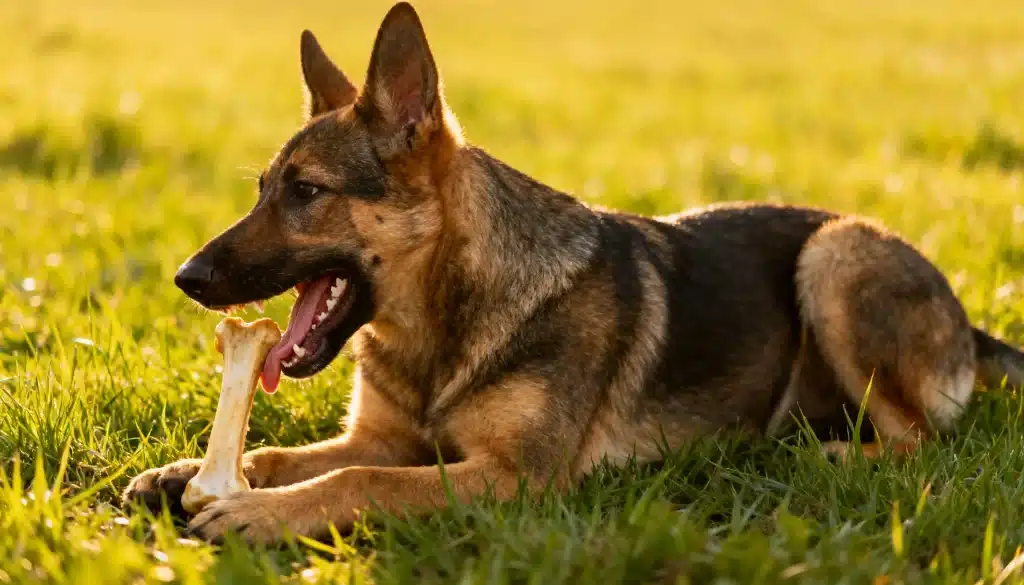
Dogs and bones are a different kind of love story. But some can crack their tooth, splinter in their throat, or cause a blockage that might need emergency surgery.
So what bones are safe for dogs to chew on?
Let’s get into it: the handbook of bones and dogs, and know where we’re going wrong unintentionally.
Are Bones Actually Safe for Dogs?
Yes, but it depends on the type of bone, the size, and how it’s prepared. No bone is 100% safe. Even the safest options carry some risk.
Supervision is always the smart move. But why do dogs naturally crave bones?
Dogs have chewed on bones for thousands of years. Long before kibble existed, bones were part of a dog’s natural diet in the wild.
So when a dog gets excited about a bone, it goes deeper than just the taste.
- Mental stimulation: Chewing keeps a dog’s brain busy, giving them something to focus on.
- Jaw exercise: The physical act of chewing strengthens the jaw muscles.
- Natural comfort: Dogs chew when they’re anxious or restless. It’s a natural self-soothing behavior.
Cooked, smoked, and small sharp bones are a hard no for dogs. They splinter, cause internal injuries, and can block the digestive tract.
What are the Health Benefits?
Bones can be a positive addition to a dog’s routine. But they work best as an occasional treat, not a daily habit, and always with an eye on the dog while they chew.
The right type of bone can offer genuine benefits, but it comes with clear conditions. Risks are always present.
Dental Health
Chewing on raw bones can help scrape plaque and tartar off a dog’s teeth. It’s not a replacement for proper dental care, but it does help maintain oral hygiene between vet visits.
Raw meaty bones are more effective at reducing plaque than synthetic chews.
Nutrients
Raw bones, particularly marrow bones, contain calcium and phosphorus.
Both are important in keeping bones and teeth strong. Dogs that chew on raw bones may absorb some of these nutrients naturally.
The calcium-to-phosphorus ratio in raw bone marrow sits close to 1:1, which is considered ideal for absorption in dogs.
Stress Relief and Boredom Control
A dog left alone with nothing to do can get destructive fast. Chewing releases calming signals in the brain, helping dogs settle down. For high-energy breeds, this can make a noticeable difference.
A dog can live a long, healthy life without ever chewing on a bone. A balanced diet handles nutrition just fine.
What Bones Can Dogs Eat?
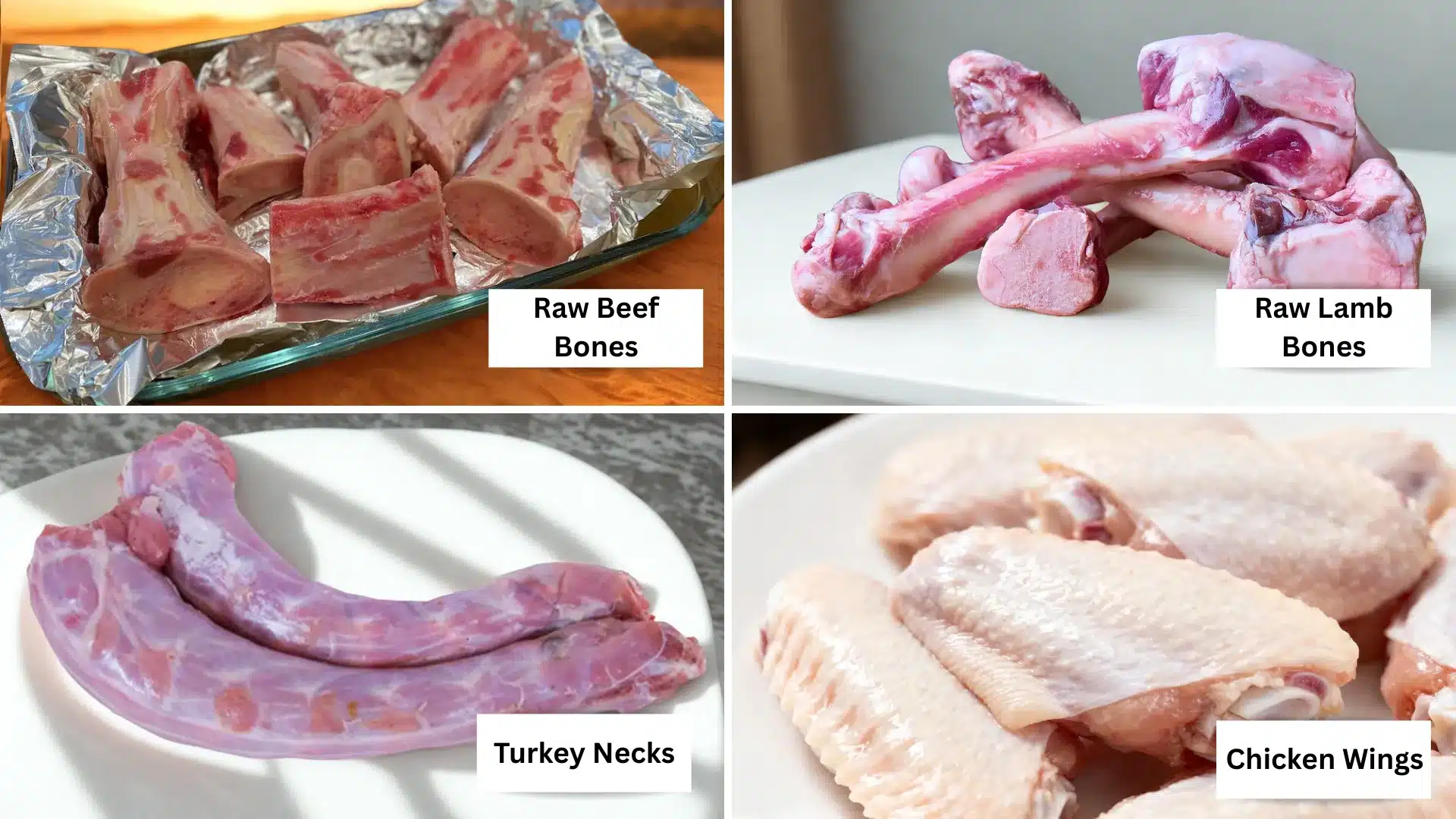
Every bone in the butcher’s display case is not a good idea for a dog. But some raw, unprocessed options do get the vet’s green light.
Raw Beef Bones
Knuckle and marrow bones are among the recommended options. They are large, dense, and hard to splinter, making them a much safer pick than smaller or cooked alternatives.
They also keep dogs occupied for a long time. Also, the bone structure stays intact rather than becoming brittle.
- Always pick a bone that’s larger than the dog’s mouth.
- Never leave a dog alone with any bone.
- Take it away once it gets small enough to swallow.
Raw Lamb Bones
Large raw lamb bones are another vet-friendly option.
They’re dense and don’t break apart as easily as smaller animal bones do, which is why they make them a better choice for medium to large-sized dogs.
Stick to the bigger cuts. Thin lamb bones or smaller pieces carry more risk and aren’t worth it.
Turkey Necks
Turkey necks come under the “edible bone” category, as they’re soft enough for a dog to chew through and don’t splinter the way cooked bones do.
And they also contain naturally occurring glucosamine and chondroitin, which can support joint health.
Medium and large dogs handle these well. Smaller dogs may find turkey necks too large to manage safely.
Chicken Wings (Raw)
Raw chicken wings are soft and fully edible for dogs. Vets often recommend them as a reasonable option, particularly for smaller breeds.
The bones are soft enough to dissolve while chewing without splintering.
The important word here is raw. Cooked chicken bones should never be given to a dog.
Neither type is risk-free, but knowing the difference helps owners make a more informed choice for their dog.
Edible vs Recreational Bones
The distinction between every bone and the purpose they serve are the most important thing.
Neither type of bone is risk-free, but knowing which one suits a dog’s size, age, and chewing style helps owners make a much smarter choice.
Edible bones: These are soft, raw bones that a dog can fully chew through and digest. Think turkey necks and raw chicken wings. They’re lighter, more flexible, and safe to consume in their entirety.
Recreational bones: They are large, dense bones like beef marrow or knuckle bones. Dogs chew on these but don’t fully eat them. The real value here is mental stimulation, jaw exercise, and natural teeth cleaning.
The Hidden Risks of Giving Bones to Dogs
Bones can be great, but they can also send a dog straight to the emergency vet.
Most owners don’t see the risk coming until something goes wrong. Understanding what can happen makes it much easier to avoid a scary situation.
| Risk Category | What Can Happen | Warning Signs to Watch |
|---|---|---|
| Choking | Bone lodges in the throat, especially when it gets too small | Pawing at mouth, gagging, distressed breathing, excess drooling |
| Broken Teeth | Hard bones crack teeth on impact, sometimes badly enough for extraction | Reluctance to eat, pawing at face, visible tooth damage |
| Internal Blockage | Bone pieces get stuck in the stomach or intestines and may need surgery | Vomiting, bloating, swollen belly, loss of appetite |
| Internal Injury | Splintered fragments cut the esophagus, stomach lining, or intestines | Blood in stool, lethargy, sudden behavior change |
| Bacterial Infection | Raw bones carry Salmonella and E. coli; risks are higher in young, old, or immunocompromised dogs | Diarrhea, vomiting, fever, low energy |
| Digestive Sensitivity | Some dogs react poorly even to safe bones, causing gut upset | Loose stools, constipation, gas, stomach discomfort |
Matching the Right Bone to the Dog
A bone that works perfectly for one dog can be completely wrong for another because every dog is different.
Imagine handing a small Chihuahua the same bone that a large German Shepherd would make no sense.
And giving a senior dog with worn-down teeth a hard, dense bone isn’t fair to them either. The bone needs to suit the dog, not just the owner’s preference.
- Large breeds – Dense bones like beef knuckles or marrow bones.
- Small breeds – Softer edible bones like raw chicken wings.
- Aggressive chewers – Hard recreational bones that won’t break apart fast.
- Gentle chewers: Soft edible bones work well.
- Puppies – Soft edible bones only; hard bones can damage developing teeth.
- Senior dogs – Softer options with shorter chewing sessions.
- Dogs with health conditions – Vet consultation before any bone.
Conclusion
So what bones are safe for dogs? Bones can be a great addition to a dog’s routine, but only when the right choices are made.
Raw beats cooked every time. Size it up, watch the clock, and bin it before it gets too small. Stick to those basics, and most problems stay well out of the situation.
Not every dog handles bones the same way; all dogs need a little extra thought before getting one.
And when things feel uncertain, a quick word with a vet clears it up fast.
Got a dog who goes absolutely wild for a good chew? Drop a comment below and share what works best for you. Other dog owners would love to know!
Frequently Asked Questions(FAQs)
1. What are the Safer Alternatives to Bones?
Rubber toys, vet-approved dental chews, and frozen carrots (for light chewers) are some safer alternatives.
2. Do Dogs Eat Bones or Just Chew Them?
Most dogs do both; they chew bones for the enjoyment, and may consume softer edible bones entirely.
3. What Bones are Safer for Dogs to Swallow?
Soft, raw edible bones like turkey necks and raw chicken wings are generally safer for dogs to swallow, as they break down more easily during chewing.